

A secret of any successful guest posting campaign is knowing how to choose high-quality websites. But what is a “high-quality website”? And which link metrics should you pay attention to?
Many say that high DA/DR and traffic are great signs. And while it’s true, they can be inflated, not giving you the full picture you need. So, to clean up all this confusion, we prepared a list of clear signals to evaluate your guest posting sites.
Why DR and Traffic Alone Don’t Guarantee Quality Guest Posts?
While DR and traffic are popular metrics for measuring the quality of referring domains, they aren’t enough on their own. Is it bad to track them? Of course, not. They are still useful, but you need more than that to understand whether a website is actually good for guest posting.
Why is DR alone not informative enough?
First of all, DR isn’t Google’s metric. It might sound surprising to some, but that’s how it is. Overall, when evaluating a domain, you’ll typically see 3 metrics that are supposed to show how trustworthy a website is:
- DR or Domain Rating: A metric by Ahrefs.
- DA or Domain Authority: A metric by Moz.
- AS or Authority Score: A metric by Semrush.
So, basically, each of those famous SEO tools has its own approach to measuring the “authority” of a web page.
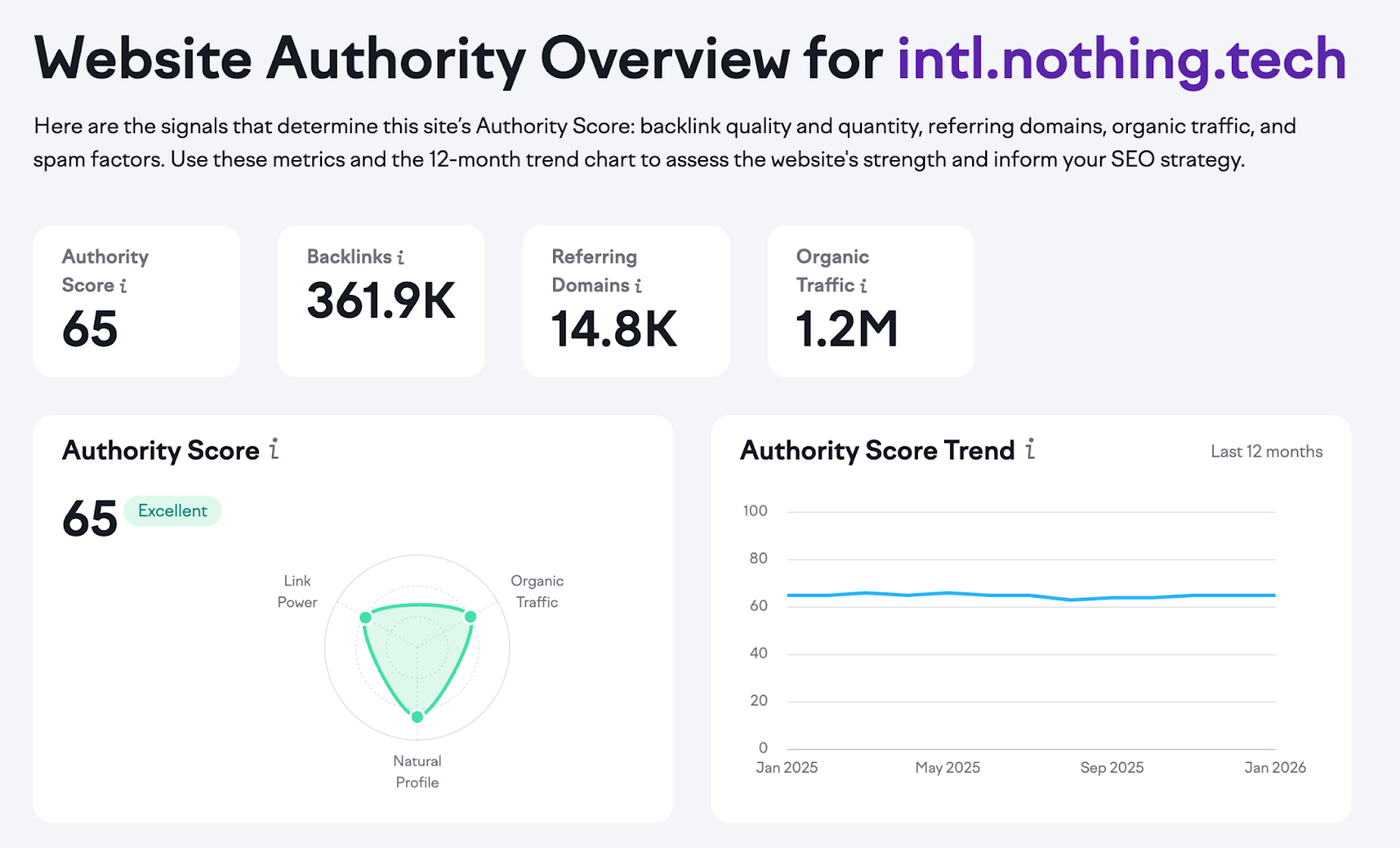
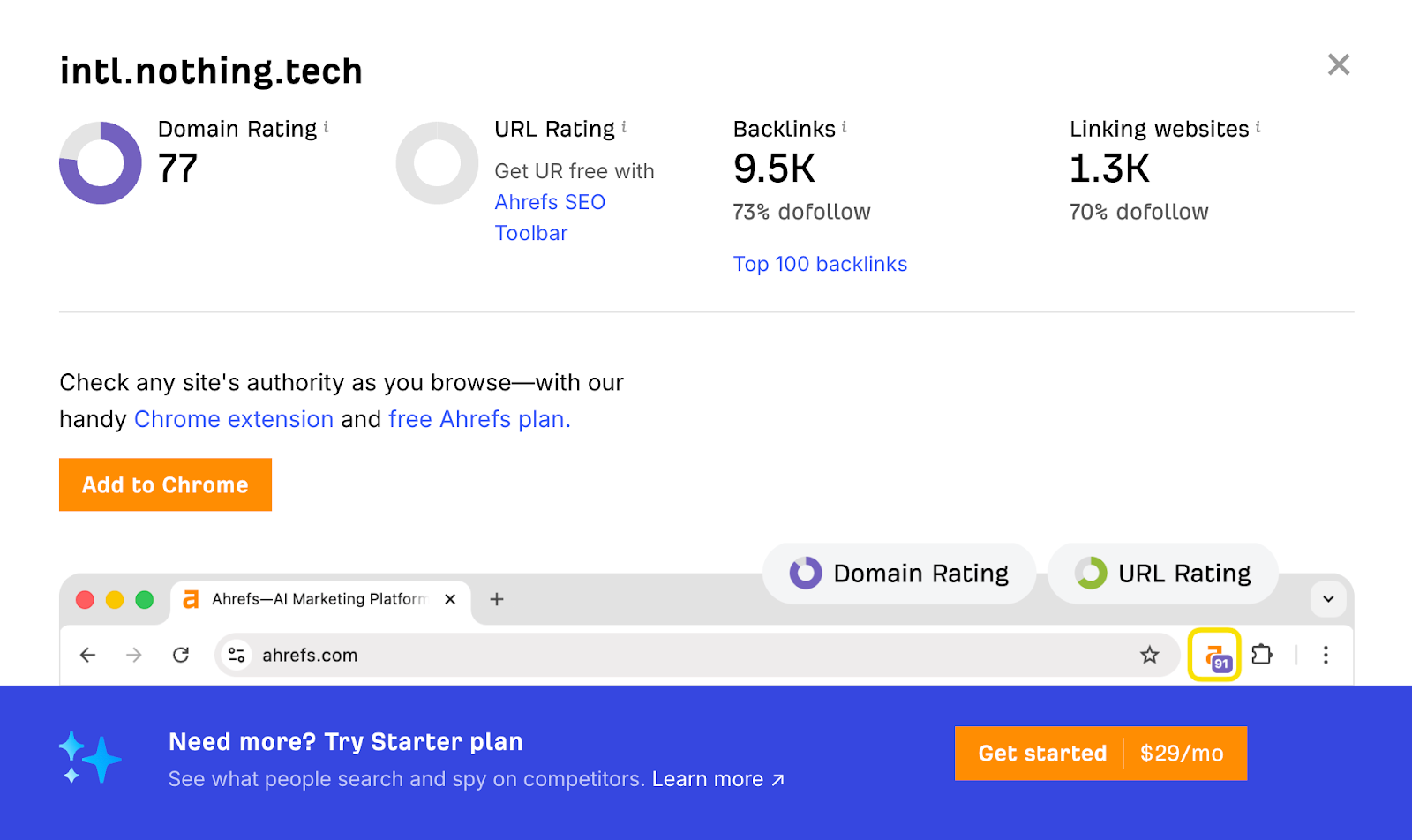
And the issue is that each solution will show a different score. Let’s take a random site and see it for ourselves.
This is an AS by Semrush:
This is DR by Ahrefs:
And this is DA by Moz:
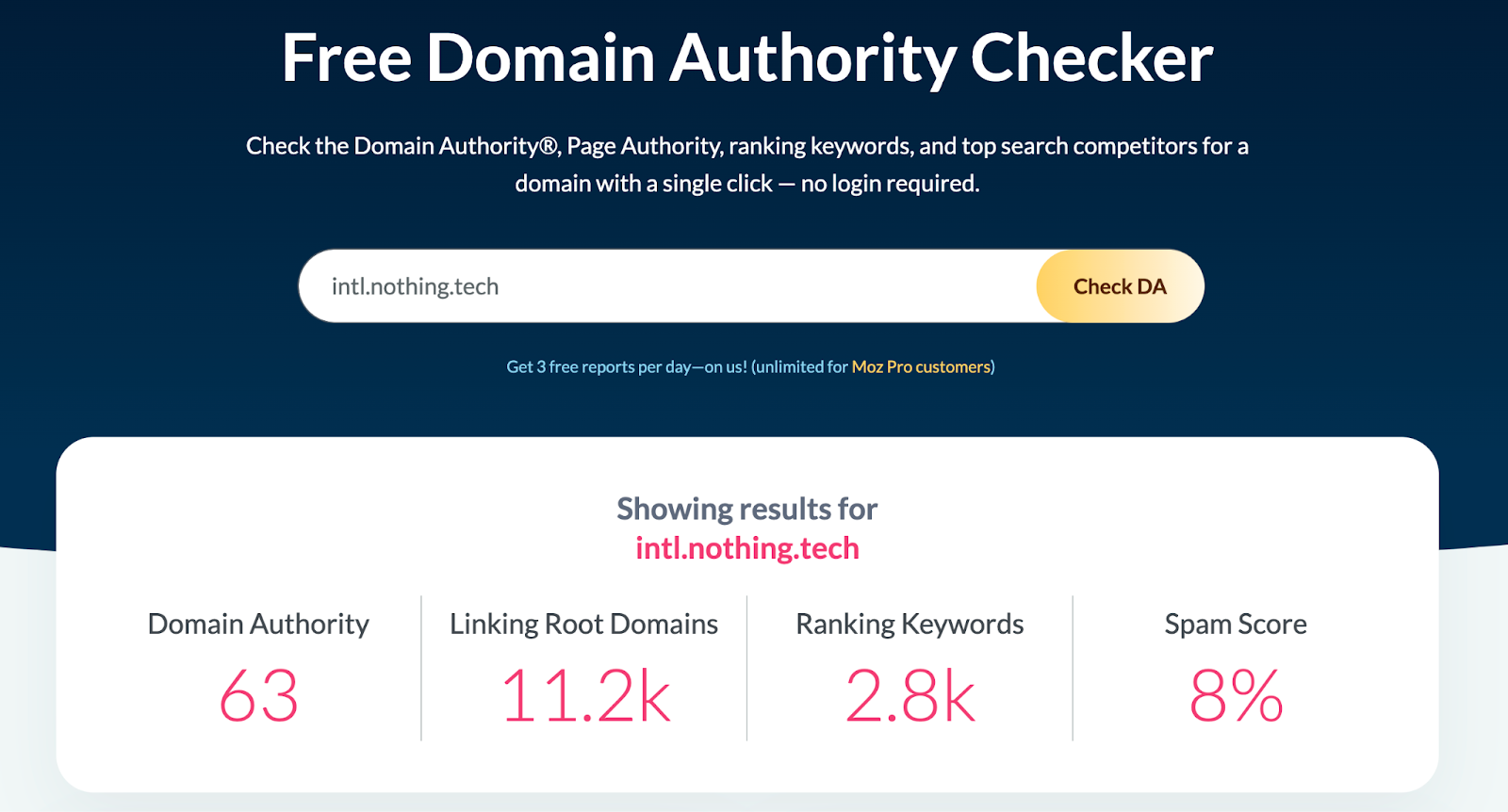
Long story short: there is no single truth, and Google doesn’t use either of the metrics above to decide how good a website is. That said, high DA/DR/AS are generally signs of a high-quality website.
But when choosing a referring domain for guest posting, it’s still better to check these metrics alongside others to get a full picture.
Now, why isn’t traffic enough?
The thing with traffic is that search engines don’t use it as a direct ranking factor. If we check the official Google page titled How Does Google Determine Ranking Results, we’ll see that the main ranking elements are:
- Meaning of the query (this refers to the intent: what does a user want to find (definition, address, tutorial, etc.)?).
- Relevance of the page (meaning how relevant your content is to the query a person searches for).
- Quality of content (this basically comes down to whether your content aligns with the E-E-A-T policy and seems reputable).
- Usability of your website (this is user experience and all technical optimization elements like Core Web Vitals).
- Context (your content will have different rankings based on location, for example, that’s why local SEO is so important).
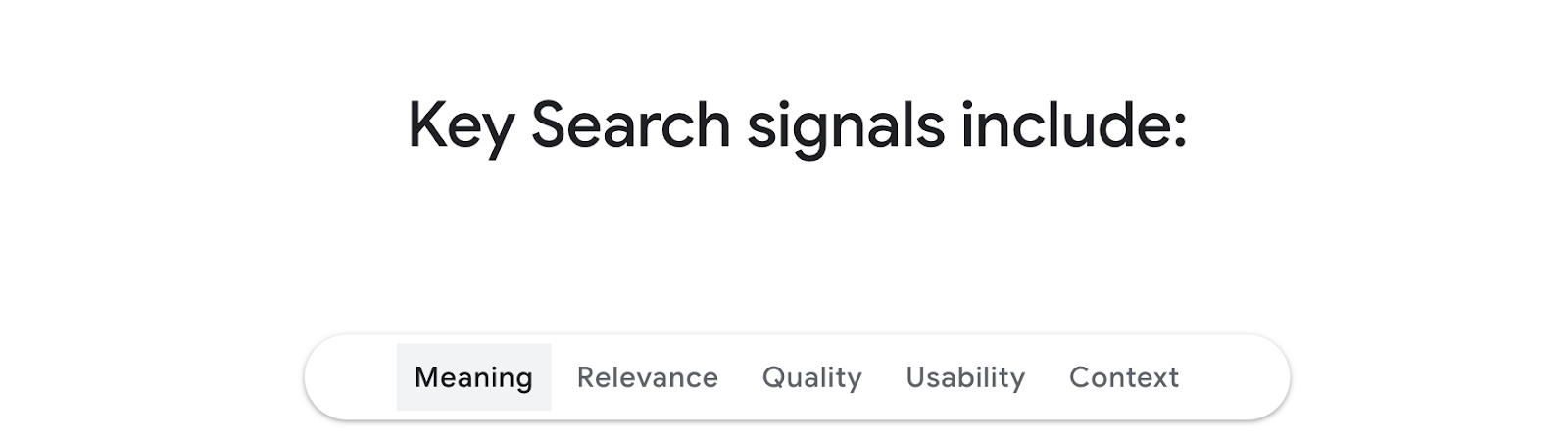
But of course, these five ranking factors are just a small part of the picture. Google's algorithm is quite complex, and no one really knows for sure how it works. That’s why you can find many contradicting thoughts out there:
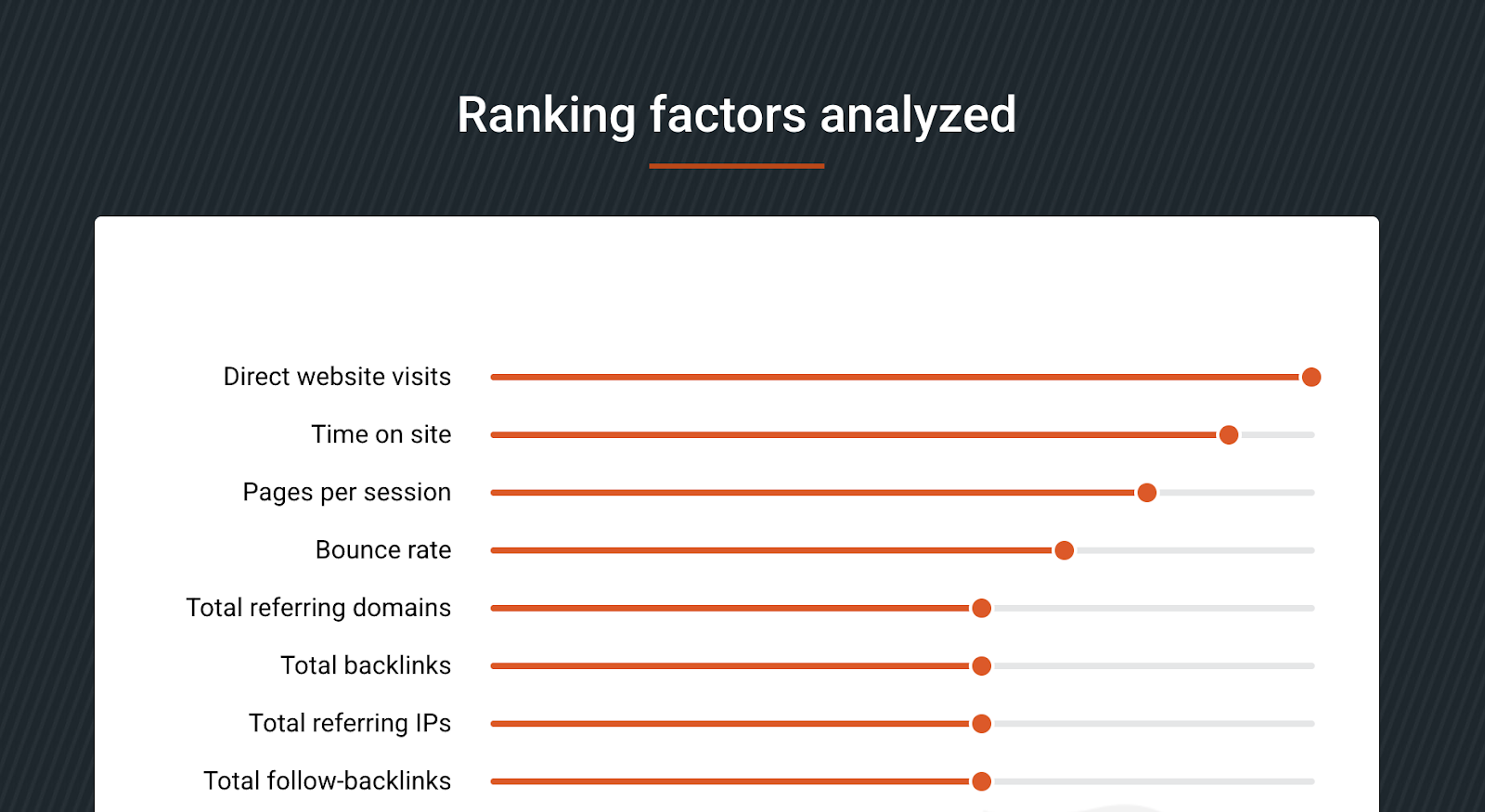
- Here is, for example, a Semrush study that says direct traffic is one of the major ranking factors.
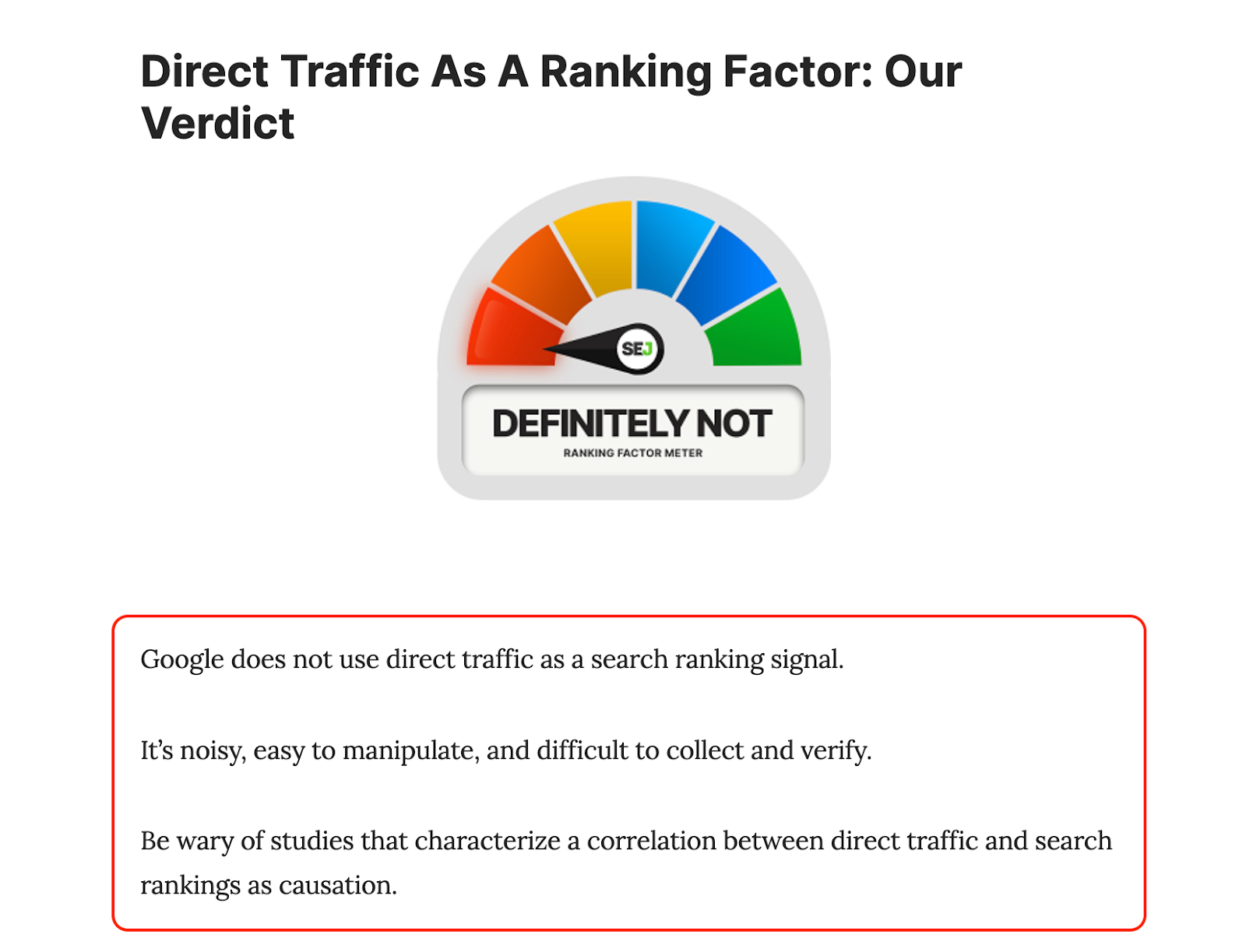
- But here is an SEJ article (one of the most reputable SEO sources) that says: “Google does not use direct traffic as a search ranking signal.”
- Then again, this is a Backlinko blog post on “Google’s 200 ranking factors.”

- But here is a Moz article on how “200 ranking factors are a myth.”
While it is confusing, especially if you’re new to SEO, everyone can agree that just DR and traffic aren’t enough to evaluate how good a website is.
So, what do you need to check in addition to these two metrics? That’s what our next section is all about.
6 Link Metrics for a Successful Guest Posting Campaign
Quality link building is all about finding quality domains that are willing to link to you.
To help you simplify this process, we’ve collected some of the most relevant metrics and signals beyond DR and traffic. These will be universal across search engines, whether you optimize for Google, Bing, Yahoo, or anything else.
Content and Link Quality
Before you get any guest post backlinks, make sure you open the potential website and check two elements: content and outbound link quality.
Ideally, this is what their content should look like:
- In-depth guides that are actually valuable (if the blog posts are thin and not original, it’s likely a PBN, which isn’t safe),
- No AI-generated content,
- Actual authors with profiles (preferably with links to their socials),
- One clear niche (not a website that posts everything, from gardening to physics).
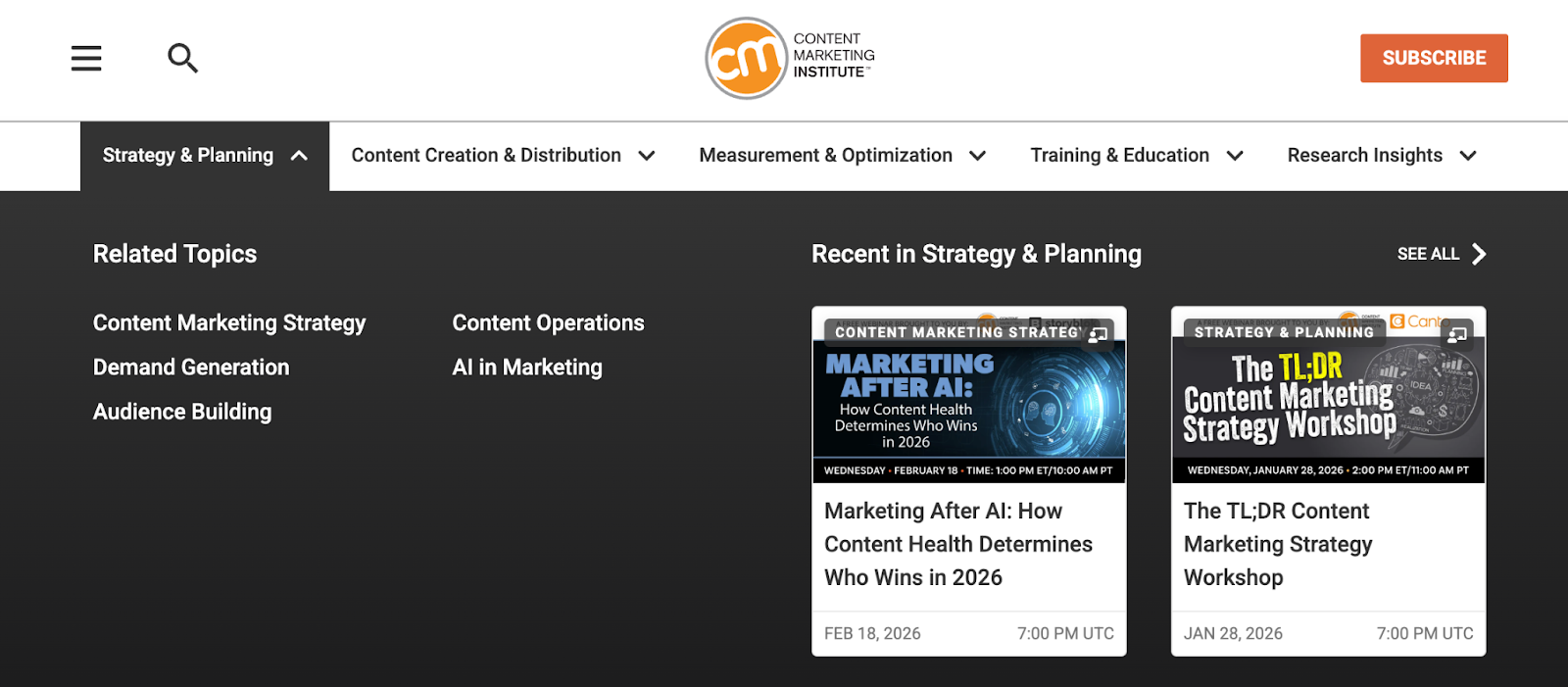
If you check any credible website, you’ll see all those signs. For example, here is the Content Marketing Institute. All their guides are in-depth, authors are real, the content is human, and the niche is very much defined (all the categories are related to content marketing).
If you aren’t sure whether the website is legit after checking their publications, you can also take a look at their TikTok, Facebook, and other social media accounts. These often help you clearly understand what they’re all about.
And as for the outbound links, check:
- How many websites does each blog post link to? (Are there dozens of them?)
- How relevant are they? (Are they linking to unrelated pages?)
- And what is the quality of those links? (Are they linking to some high-risk niches like gambling, adult, etc.?)
If any of those are true, this is a bad sign.
Pop-Ups and Ads
We all know those websites that bombard you with pop-ups and ads the moment you land on them.
While it’s simply annoying, it’s also a sign that a website owner doesn’t really care about user experience. And that’s something both people and search engines hate (remember how we talked about usability as one of the ranking factors?).
So, whether you’re looking for your links by yourself or using a guest posting service, make sure to check that your potential referring domain only has organic-looking ads to avoid any link risks.
Spam Score
Spam score is a metric developed by Moz. What it does is that it compares your site with other similar web pages that were banned or penalized before, based on 27 features. Depending on the similarities you have with those penalized sites, you receive a spam score.
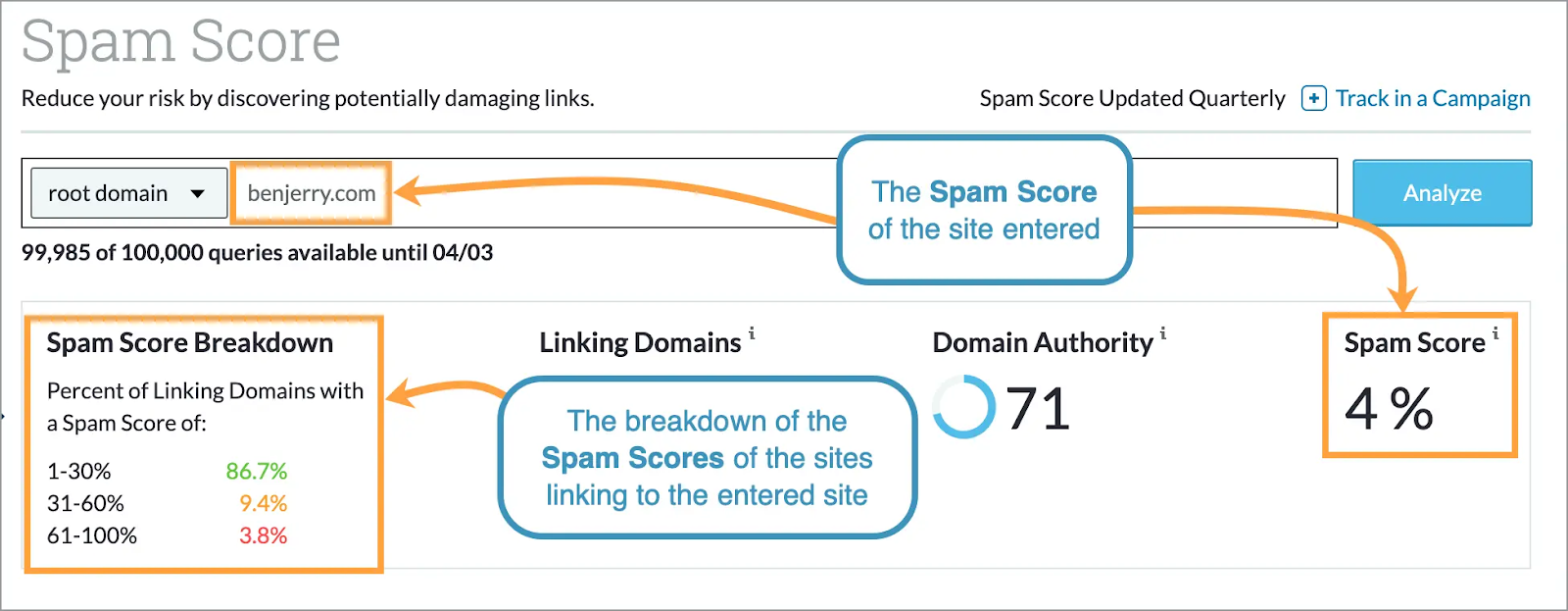
Source: Moz
Generally speaking, any score between:
- 1% and 30% is considered low.
- 31% and 60% is medium.
- 61% and 100% is high.
Despite the name of this metric, having a medium or high score doesn’t necessarily mean the website is spammy. As Moz itself puts it: “It's a sign that you should do some more investigation into the quality and relevance of this site.”
So, again, as with any number, you have to look at the bigger picture, not just one metric.
Inbound vs. Outbound Links
The inbound vs. outbound link ratio is a very important part of a backlink profile because it could be a real sign of a spammy website. First, let’s figure out what these are:
- An inbound link is a link that points from another external website to your site.
- And an outbound link is one that goes from your website to another website.
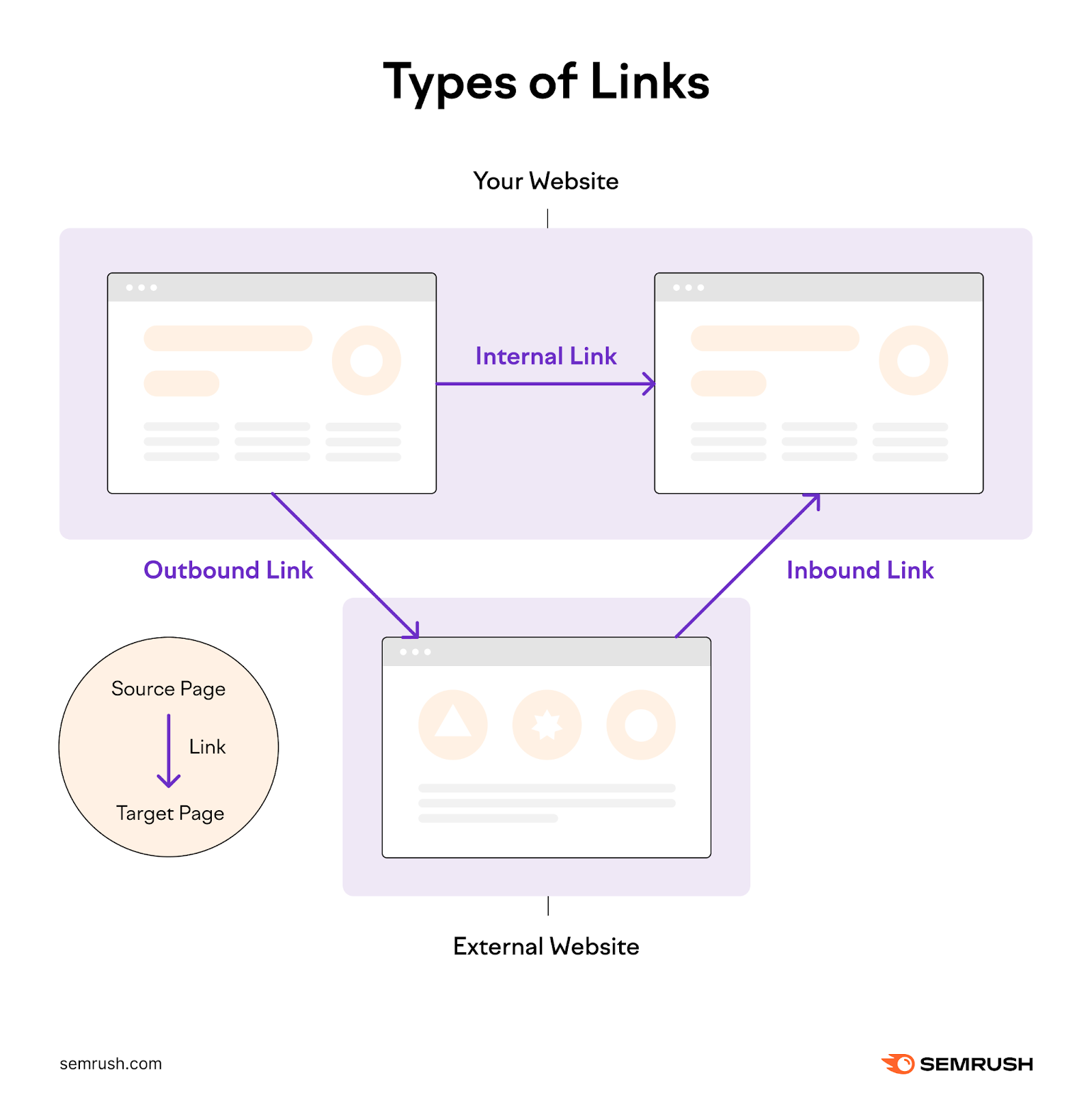
Why should you pay attention to this ratio? Simply because if a website sends out many more links than it receives, it usually isn’t a high-quality page.
For Google, backlinks (inbound links) are a sign that other people appreciate the content you publish. So, it adds to your credibility.
Of course, the links you add to other sites don’t mean you lose credibility. But if a website has tons of spammy outbound links to random pages, it’s not a good place for quality guest posts.
Rankings and Indexing
One of the main goals of SEO is to get a website to rank for specific keywords. So, when choosing pages for link building, you have to check how the prospect site is doing in this department.
Start by checking the following:
- What keywords does the website rank for? (Ideally, at least some of them should be related to your niche).
- How good are their rankings? (You want to get backlinks from websites that have at least some of their content in the top 10 search results).
You can easily find all this information in any SEO tool you prefer.
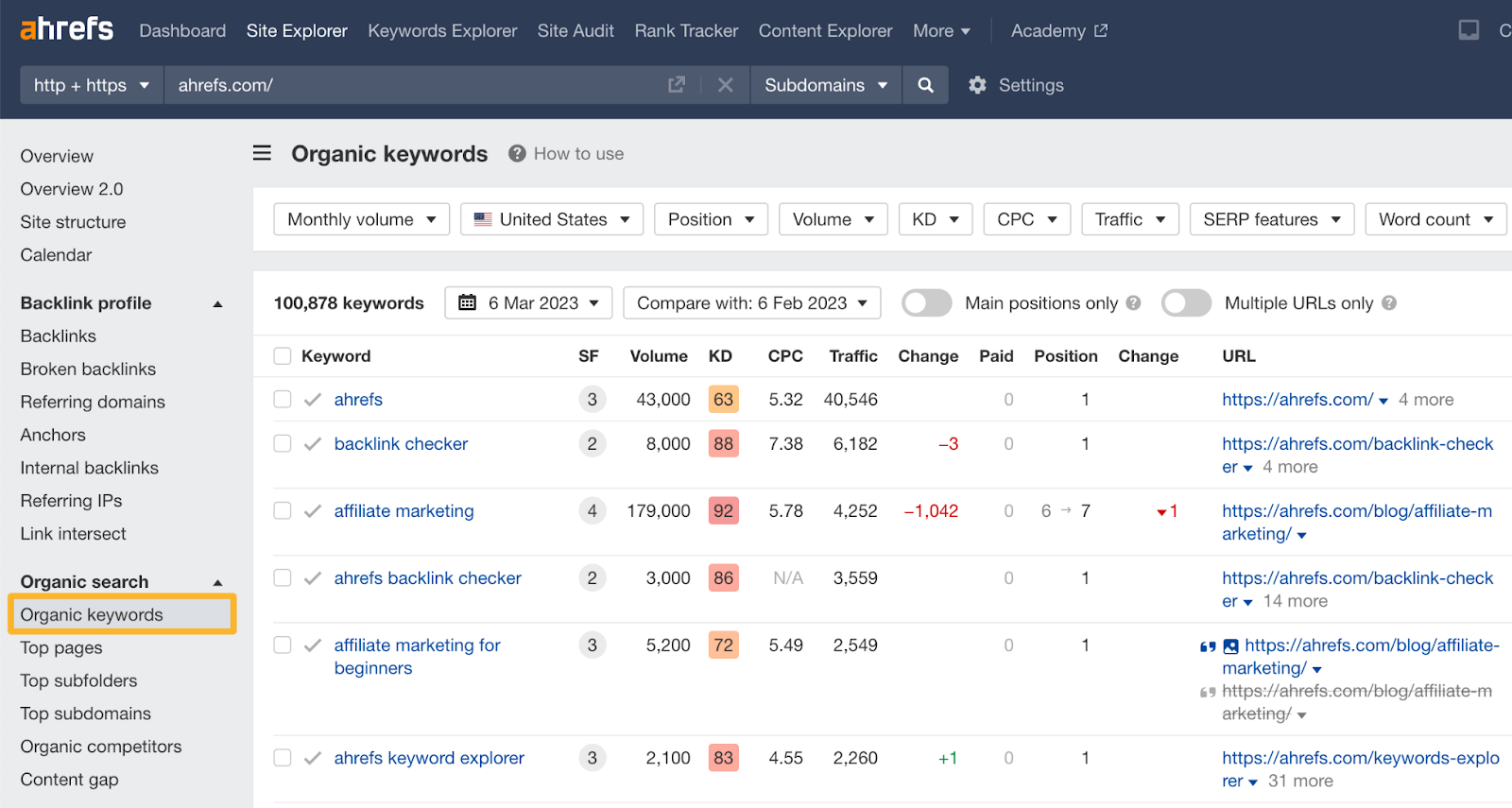
In addition to keyword rankings, check how fast their pages get indexed. Because generally speaking, it means that Google trusts the domain and that the site is crawled frequently.
If you receive a backlink from a page that never gets indexed, it will be invisible. So, what’s the point?
To avoid it, run a simple check. Take a look at their blog and copy the URL of one of the latest blog posts, go to Google search, and type: site:www.theURLyoucopied.com. If you see that page in search results, it’s indexed. You can also use a free online index checker for this.
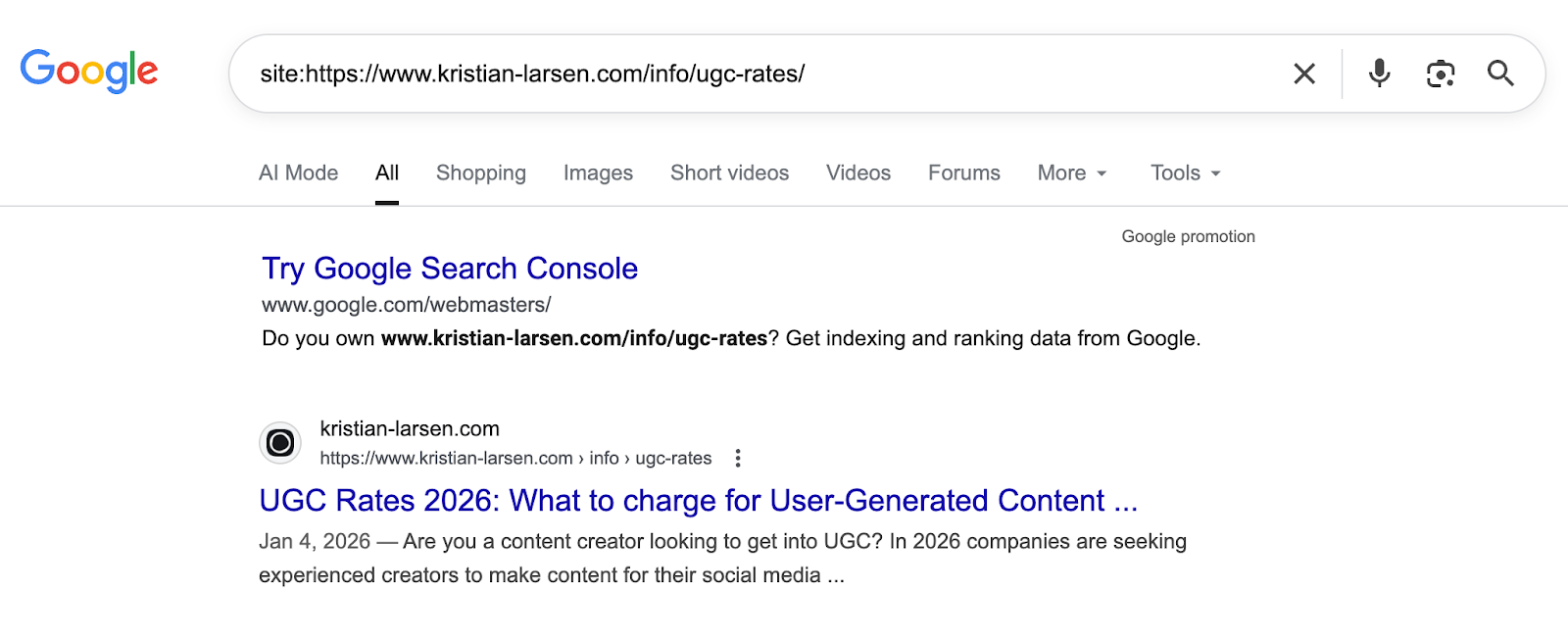
Typically, any normal website should get its blog posts indexed in up to 3 days. So, if you see that most of their pages aren’t, it isn’t a good sign.
This is a very straightforward way to understand whether the domain you’re choosing for your guest posting campaign will drive real results or will be simply useless.
Topics and Niche
Sure, search engines care a lot about domain quality. But they also care about backlink relevancy. So, any quality link building means prioritizing websites in your niche. For example:
- If you write about technology, getting a guest post on any tech-, AI-, business-, or even marketing-related website is alright.
- If you’re a wellness brand, gaining a link from any page related to health, fitness, mindfulness, daily routines, or maybe even cooking seems totally natural.
- But if you’re a motorcycle repair business getting a link from a kindergarten website, it’s strange, to say the least.
One irrelevant link won’t hurt your entire backlink profile. But if this turns into a habit, it really isn’t safe. So, make sure to only target niche-relevant pages in your guest posting campaigns.
According to Roketto, it’s also important to understand the positioning of your target website. Because if your backlink sources have very different values from yours, publishing a guest post could hurt your reputation.
This won’t be relevant to all website owners, but if you’re a business, keep that in mind.
Conclusion
Getting quality guest posts takes more than simply checking traffic and DR. And as you can see, it often comes down to basic common sense.
Does that website look legit? Does it feel trustworthy? These are the first questions you should ask yourself. Only then does it make sense to look at the other link metrics we’ve covered today.