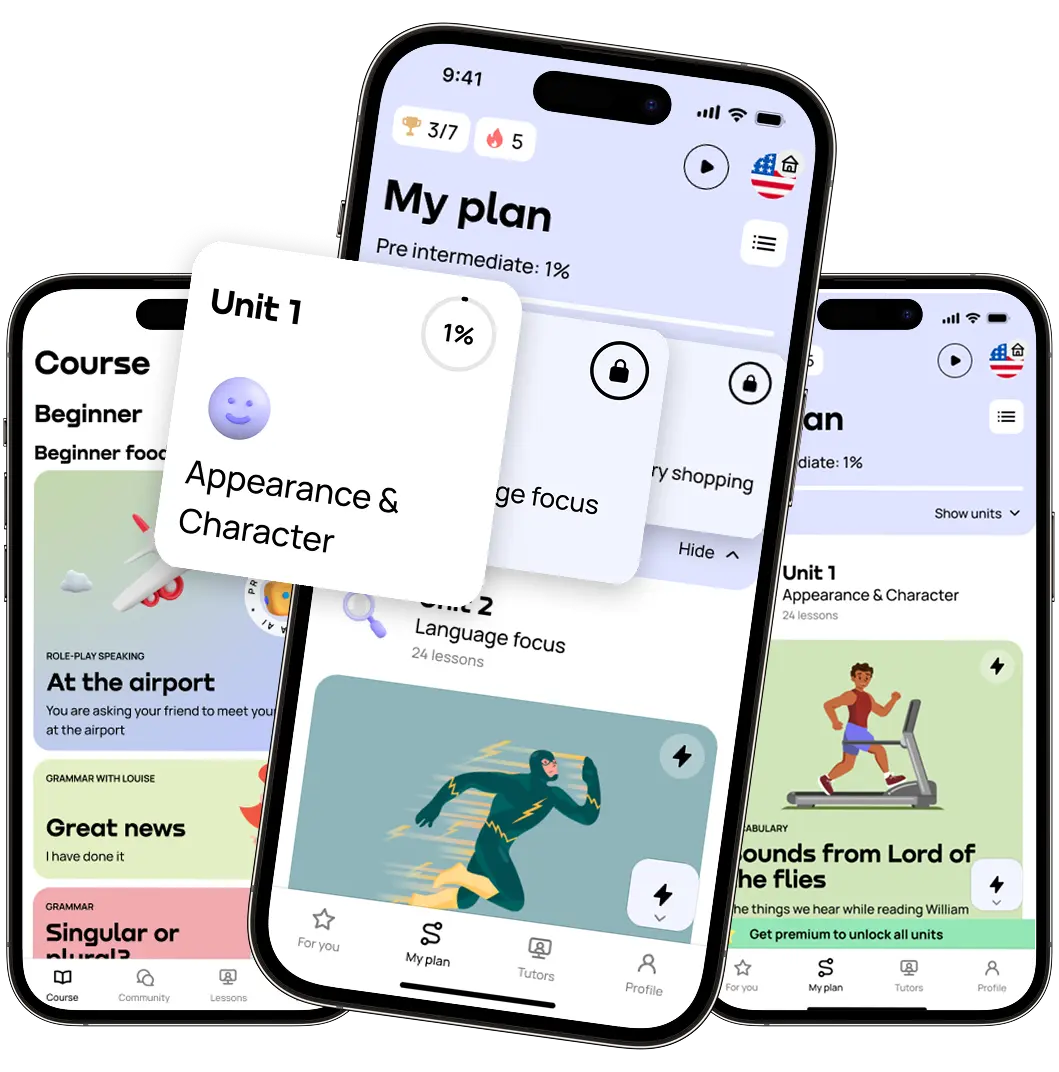
Online language study has never been louder. Every month, a fresh platform lands in the app store promising faster fluency, smarter algorithms, and friendlier parrots. Most disappear as quickly as they arrive. Promova, however, has stuck around long enough to rack up more than twenty-three million downloads and partner with boxing superstar Oleksandr Usyk. That raises an obvious question: are its interactive lessons genuinely smarter, or just a glossy remix of flashcards that have existed since Palm Pilots?
Over the past eight weeks, the author tested Promova on web and mobile, bouncing between English (the control language) and a brand-new tongue - Korean. The hands-on, jargon-free breakdown below is aimed at curious learners and productivity enthusiasts who want to know whether Promova’s AI-heavy approach is worth carving out a daily spot in their routine.
First Impressions and Onboarding
Promova’s sign-up flow is remarkably breezy. A slider asks how much time the learner can give each day; tick boxes capture goals, and a short placement quiz nudges the user into a starting level. The quiz feels like a conversation rather than a standardized test: it asks why Korean is being studied (“travel,” "work," or “pop culture”) before throwing vocabulary and listening checks.
Then comes the first surprise. Instead of dropping the learner into a generic Unit 1 - hello, goodbye, apple, banana, the app presents “Promova's interactice Korean lessons” (their copy editors still need to fix that typo), bundled around a travel scenario: ordering spicy rice cakes at a Seoul street stall. The vocabulary list is short, but the phrases are full sentences, spoken by a natural-sounding voice, and immediately reinforced through a role-play in which the user speaks to the AI vendor. According to McKinsey, 71% of consumers now expect personalized interactions as a baseline, and failing to meet this expectation, especially during the critical first week, is a primary driver of user churn. Promova seems designed with this insight in mind, using adaptive paths to bypass the "generic unit" fatigue that plagues traditional apps.
The signup pipeline also introduces a lightweight tutorial on tapping, swiping, and long-pressing for definitions. That may sound mundane, but it prevents the common “what does this button do?” friction found in other apps. By the time the first real lesson appears, even tech-shy learners feel oriented.
How Interactive Are the Lessons, Really?

Promova claims its secret sauce is variety: bite-sized grammar, pronunciation analysis, role-play dialogues, video explainers, and short reading passages from the public domain. classics. Skeptical reviewers set out to see whether that mix merely rotates boredom or meaningfully deepens retention.
Bite-Sized Grammar That Doesn’t Feel Like Baby Steps
Mini grammar lessons look familiar: fill-in-the-blank, reorder the sentence, and choose the right conjugation, but they move quickly and rarely repeat an identical prompt. A visible “smart review” counter shows how many mistakes have been made in the past 24 hours; drop below an accuracy threshold, and the algorithm schedules extra drills for the next morning. The pace hits a sweet spot: brisk enough that attention never drifts, yet comprehensive enough that no one ends up Googling explanations later.
Role-Play With AI Tutor: Confidence Training Wheels
Promova’s flagship feature is the AI Tutor that behaves less like a chatbot and more like a patient improv partner. Imagine stepping into a virtual convenience store: the screen shows shelves, a clerk greets the learner, and responses can be given by voice or text. If a vowel is mispronounced, the waveform turns red on the exact phoneme. Fix it on the spot; the conversation moves forward. What impresses many testers is how the AI riffs on earlier mistakes. Confuse “cheap” and “expensive” in Korean? Two sentences later, the clerk might cheekily ask whether the shopper is sure about the price.
The adaptive memory keeps users on their toes, and it also lowers the stakes: no human witness, no embarrassment. By week three, most testers were volunteering longer sentences just to see how far the system could follow them. It rarely breaks character.
A handful of specific interaction perks stand out:
- The AI Tutor references words learned in the previous 48 hours, encouraging immediate recall.
- Background noise suppression lets commuters practice on a train without false negatives.
- “Retry only the red words” mode saves time by skipping correctly pronounced segments.
- Dialogues branch, so polite-form sticklers can choose 존댓말 while casual learners pick 반말.
These extra touches elevate role-play from gimmick to genuinely useful rehearsal. After sessions, a quick text summary lists mispronounced syllables and suggested mouth shapes, making self-correction feel concrete rather than abstract.
Video and Reading: Multi-Modality Without Extra Apps
Every few units, a short video appears, usually featuring two native speakers acting out a scenario. Subtitles flash one word at a time, karaoke style, and a rewind button loops the last five seconds for shadowing practice. Reading passages, meanwhile, pull from classic literature or modern news bites licensed for educational use. They are graded by CEFR level, so a beginner isn’t thrown into “The Tale of Chunhyang” on day one.
Together, these formats rescue the course from the “tap-tap-green-checkmark” treadmill common in other apps. They also expose learners to different voices - something single-voice platforms still struggle with. Shadowing short dialogues, then immediately seeing the same structure in print, reinforces both listening and spelling.
Personalization Engine: Promise vs. Reality
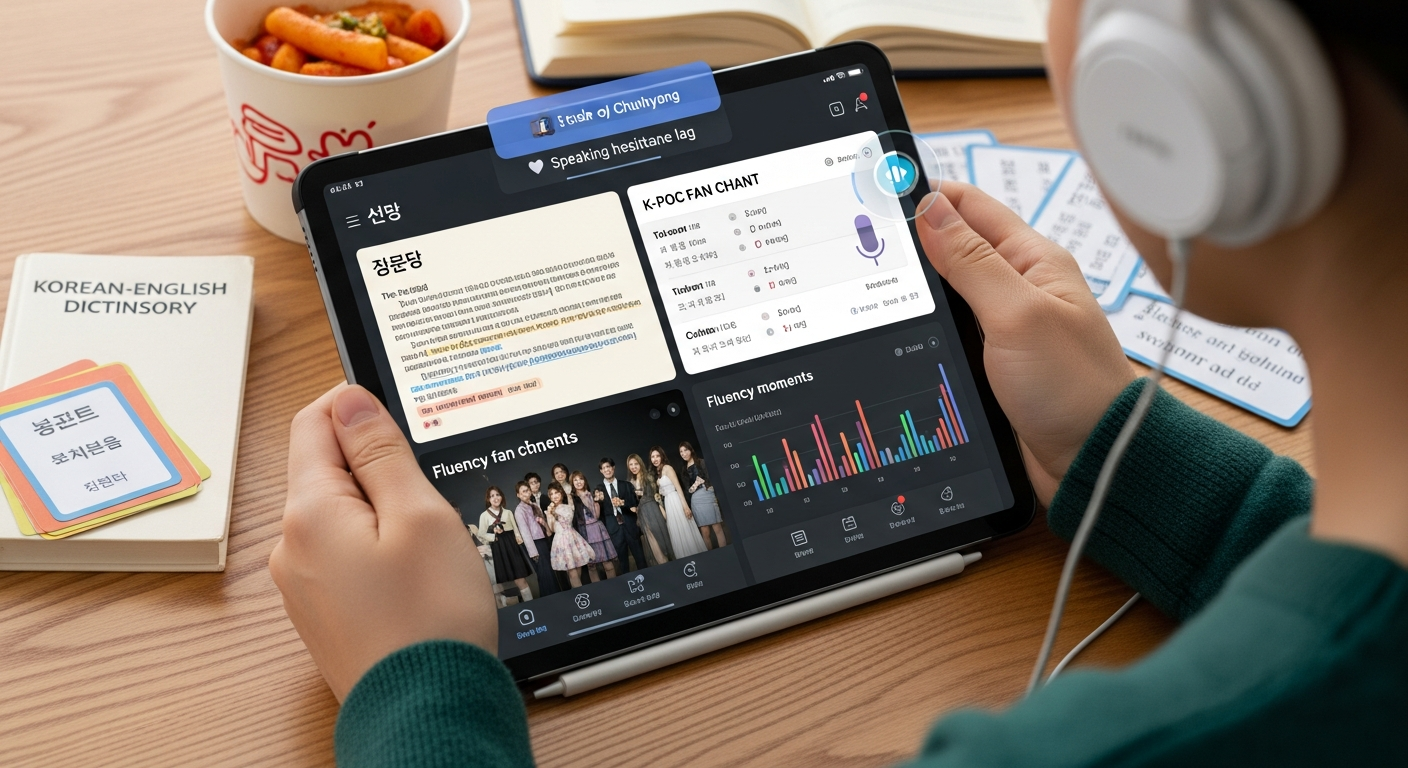
During onboarding, Promova asked each learner to select motivations and current proficiency. The next day, it recommended a unit on Korean street food, followed by a lesson on K-pop fan chants - eerily on point for anyone who ticked “pop culture.”
Behind the curtain, Promova tracks accuracy, time-per-question, skipped exercises, and speaking hesitation lag (how long a user pauses before answering). It combines those signals to decide whether to:
- Repeat similar tasks at lower difficulty,
- Push harder vocabulary, or
- Switch modalities altogether (e.g., from fill-in-the-blank to pronunciation drill).
Most of the time the recommendations feel logical. However, when testers intentionally raced through an easy English grammar set, the AI still promoted them even though the material had barely registered. The system seems to prioritize speed and correctness over depth of processing.
On the upside, the personalization dashboard now includes weekly “fluency moments,” short audio clips saved from role-plays. Clicking a past moment brings up both the original AI prompt and the learner’s recorded answer. Replaying those bites several weeks later offers a surprisingly motivating glimpse into personal progress. Gartner predicts that by 2027, 75% of new analytics content will be contextualized through GenAI, moving the industry away from generic progress bars toward "perceptive" systems that use a learner’s own history to drive engagement.
Strengths That Make Promova Stand Out
A language app rises or falls on the practical value it adds beyond free dictionaries and YouTube channels. While no software is perfect, Promova delivers a handful of strengths that genuinely change the way self-study feels day to day.
Promova’s designers insist that “interactivity” is more than a marketing tag; they define it as constant, two-way adjustment between learner and content. The following subsections break down the concrete advantages that philosophy brings.
Phoneme-Level Pronunciation Feedback
Plenty of apps claim to correct pronunciation, yet many simply measure loudness or cadence. Promova’s speech engine highlights specific vowel and consonant errors, color-codes stress patterns, and allows unlimited retries. After two weeks, most beginners notice their Korean vowel harmony improves noticeably. Comparing early recordings with day-14 samples reveals both embarrassing and satisfying differences. In a 2025 experimental study published on ResearchGate, 70% of adult learners using AI-mediated corrective feedback showed a significant reduction in speech errors and improved phonemic recognition within just eight weeks. This targeted feedback allowed high-engagement users to bridge the gap between CEFR sub-levels nearly 20% faster than those in traditional, feedback-delayed environments.
Crucially, the engine does not just score a line as pass/fail; it drags a slider under the waveform so learners can scrub to the exact misfire. Such granularity turns an elusive concept (“You sound wrong”) into a solvable problem (“Your tongue placement slipped on the ʌ sound”).
Adaptive Vocabulary Recycling
Retention often crumbles because apps toss a word into a deck and then forget about it. Promova’s adaptive vocabulary system does the opposite, resurfacing terms in later contexts until they stick. The algorithm considers:
- Error frequency over the past seven days.
- Whether the word has been actively used in AI chat.
- Time-decay weighting (newer mistakes loom larger).
- Part-of-speech balance to avoid a noun-heavy curriculum.
- User-chosen interests from onboarding (e.g., travel slang).
- Difficulty ratings crowdsourced from similar-level peers.
Because resurfacing is triggered by real performance, users encounter words right before forgetting them, not long after. That timely nudge converts passive recognition into reliable recall.
Sentence-Building Drills That Encourage Creativity
Flashcards teach single words; Promova’s “Sentence Lab” encourages full-blown production. Learners receive a jumbled stack of chunks - subject, verb, complement - and must voice or type an original sentence. The AI finds grammatical mistakes in real time and then suggests two different ways to say the same thing. The feature fights a common plateau where students know a lot of vocabulary but can't think of anything to say when asked to improvise by encouraging flexible composition
A quick menu allows toggling difficulty:
- Basic pattern (S-V-O)
- Clausal connectors (because, although)
- Idiomatic add-ons (after all, in the long run)
- Formal vs. casual register
Because these drills feel like building with Lego rather than filling blanks, many users report higher engagement during longer study sessions.
Cultural Modules That Transcend Phrasebooks
Every language pack contains “culture cards”: five-minute snippets on etiquette, humor, gestures, and micro-history. Skipping them feels like turning down free context. Learners exploring Korean, for instance, discover why age calculations add a year at birth, how hierarchy affects verb endings, and why silence can signal politeness rather than awkwardness.
The cards also weave in mini glossaries. After reading about bowing angles, users see the verbs for “to bow,” “to nod,” and “to bend” pop up in later lessons. Embedding vocabulary in cultural narrative makes it memorable.
Offline Mode for Commuters
In mid-2025, Promova quietly rolled out an offline pack feature. Premium subscribers can preload up to 25 units, including AI voice recognition processed locally on the device, thanks to a trimmed acoustic model. For metro riders and frequent flyers, that capability removes the last excuse to skip practice. Offline mode does have limits (no live leaderboard updates and no Usyk voice cameo), but pronunciation feedback and Sentence Lab remain functional.
Travelers have praised the feature in app-store comments, often highlighting reduced data anxiety and smoother audio when network coverage drops.
Where Promova Falls Short
Even compelling apps have room to mature. Promova’s chief limitations are less about glaring flaws and more about growth areas the company openly acknowledges on its roadmap.
First, depth varies across languages. English enjoys dozens of specialized tracks like Business English for Finance, Slang 101, while Korean currently tops out at low-intermediate. Advanced learners preparing for certification exams (e.g., TOPIK V) will eventually need supplemental material.
Second, the motivational scaffolding can incentivize speed over reflection. Streak flames, gem multipliers, and leaderboards gamify habit formation; however, a few users may find themselves tapping through vocabulary at lightning pace merely to keep a badge alive. Promova mitigates the risk with gentle “slow down” banners after clusters of rapid mistakes, yet disciplined learners may still choose to occasionally disable push notifications and schedule deliberate review blocks.
Finally, the search feature in the app is still pretty literal. When you type "conditional sentences," it pulls up every lesson that has the letters "sent," which can make the results messy. Filtering by grammar topic or level of proficiency would make self-study easier.
While these limitations deserve mention, none fundamentally detract from the daily training loop that makes Promova valuable. For most learners, especially beginners through solid intermediates, the platform’s current breadth, complemented by outside resources for edge cases, is more than sufficient.
Pricing, Value, and Alternatives
Promova's prices fluctuate by region; in the U.S., the annual plan typically sits at $98.99 in 2026 (though frequently discounted to $63), a mid-range cost (cheaper than Babbel Live but comparable to Super Duolingo). A lifetime option occasionally drops to around $199 on the official website, though it can be found for as low as $79.99 through third-party deal platforms.
Is it worth it? Two litmus questions clarify the calculation:
- Will the learner speak aloud every day?
If yes, Promova’s pronunciation engine and role-plays justify the fee.
- Is the target language one of Promova’s primary focuses (English, Spanish, French, German, Italian, or Korean)?
Those packs enjoy frequent updates; niche tongues see slower expansion.
For comparison, Duolingo remains unbeatable for free micro-bursts, while italki supplies live tutors but no autonomous practice. LingQ excels at reading immersion but lacks AI speaking drills. Promova occupies the middle ground: self-paced, speech-centric, and moderately priced.
Verdict: A Smarter Way - For the Right Learner
After two months with Promova, the reviewer can order food, ask directions, and parse a couple of K-pop lyrics in Korean. More importantly, there is no longer panic when native speech arrives at natural speed; the AI Tutor conditions the ear and tongue simultaneously. That confidence is no small feat.
Promova is not perfect. Its content depth outside the big six languages still lags; its gamified streaks can seduce users into shallow skimming; and the algorithm occasionally confuses speed with mastery. Yet for the everyday learner who craves interactive conversation without the social anxiety of a live class, the platform delivers on its promise more consistently than most rivals.
Is it a “smarter” way to learn? Provided a learner commits to speaking aloud, reviewing culture cards, and resisting the streak-chasing impulse, the answer is yes. Treat language learning as a marathon, not a nightly mini-game, and Promova’s toolkit will shave minutes off a personal best.