

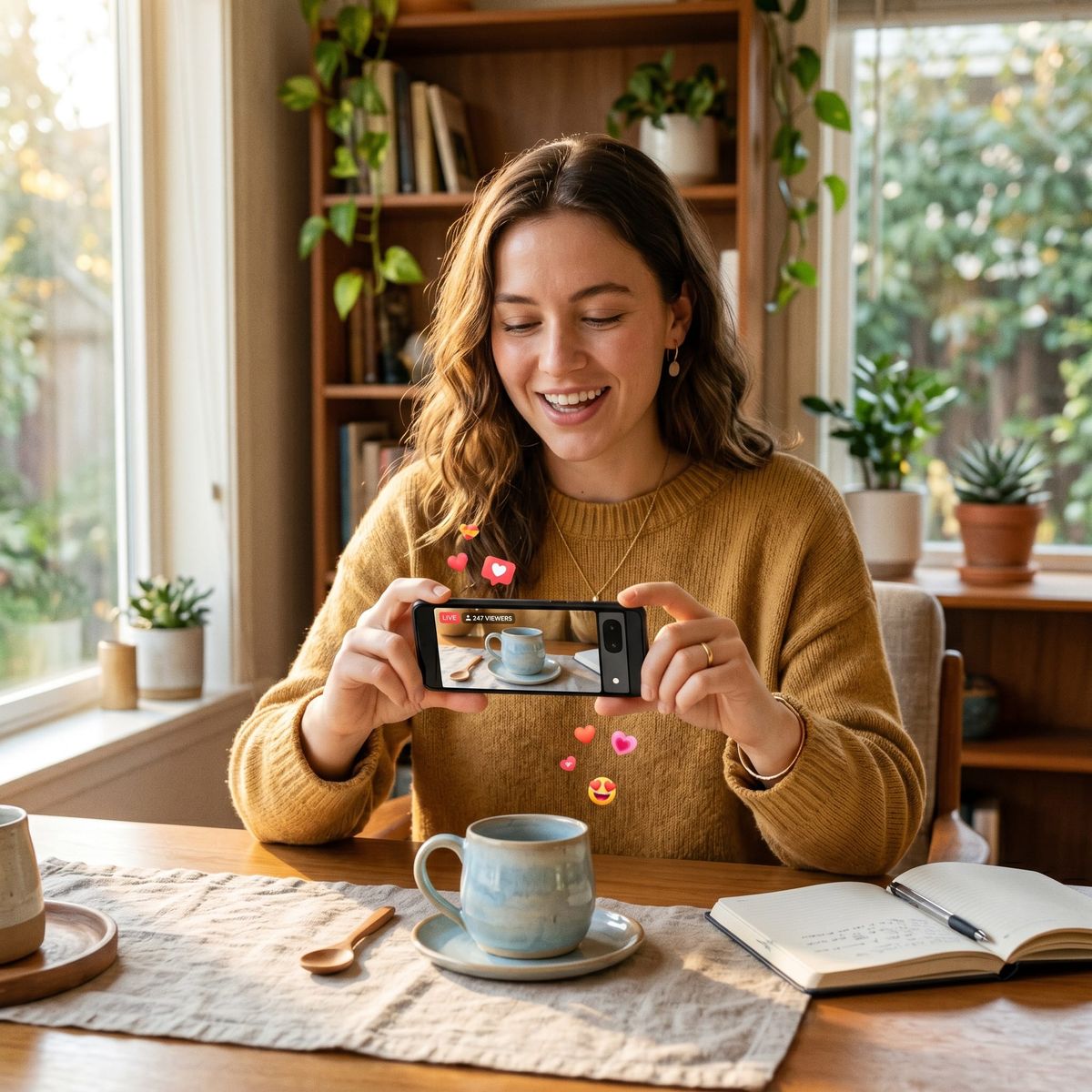
UGC ads are among the highest-performing ad formats in digital marketing right now. They consistently outperform traditional brand-produced creative on Meta, TikTok, and YouTube - and they cost less to produce. Here's what UGC ads are, why they work, and how to use them.
What Are UGC Ads?
UGC stands for user-generated content. UGC ads are paid advertisements that use content created by real customers, community members, or creators who produce authentic-feeling content on a brand's behalf.
The key distinction: UGC ads look and feel like content from a real person, not a marketing department. No polished studio lighting, no corporate voiceover. Instead: someone talking to camera about a product they actually use, a phone-recorded unboxing, a before/after transformation, or a "day in my life" that naturally features a brand.
Brands either repurpose organic content posted by customers (with permission) or commission UGC creators to produce authentic-style content specifically for paid distribution.
UGC Ads vs Traditional Ads: The Key Differences
| Factor | Traditional Brand Ad | UGC Ad |
|---|---|---|
| Production style | Polished, studio-produced | Raw, authentic, phone-filmed |
| Creator | Agency or in-house team | Real customer or UGC creator |
| Cost to produce | $1,000-$50,000+ | $50-$500 per video |
| CTR vs standard ads | Baseline | 4x higher average |
| Conversion rate | 1-3% | 3-6% |
| Cost-per-click | Baseline | ~50% lower |
| Perceived trust | Lower ("this is an ad") | Higher ("this is real") |
Why UGC Ads Work
The core reason UGC ads outperform polished creative is trust. Consumers in 2026 have seen thousands of ads and develop automatic skepticism for anything that looks overtly branded. UGC bypasses this filter because it mimics the look and feel of organic content from a friend or peer.
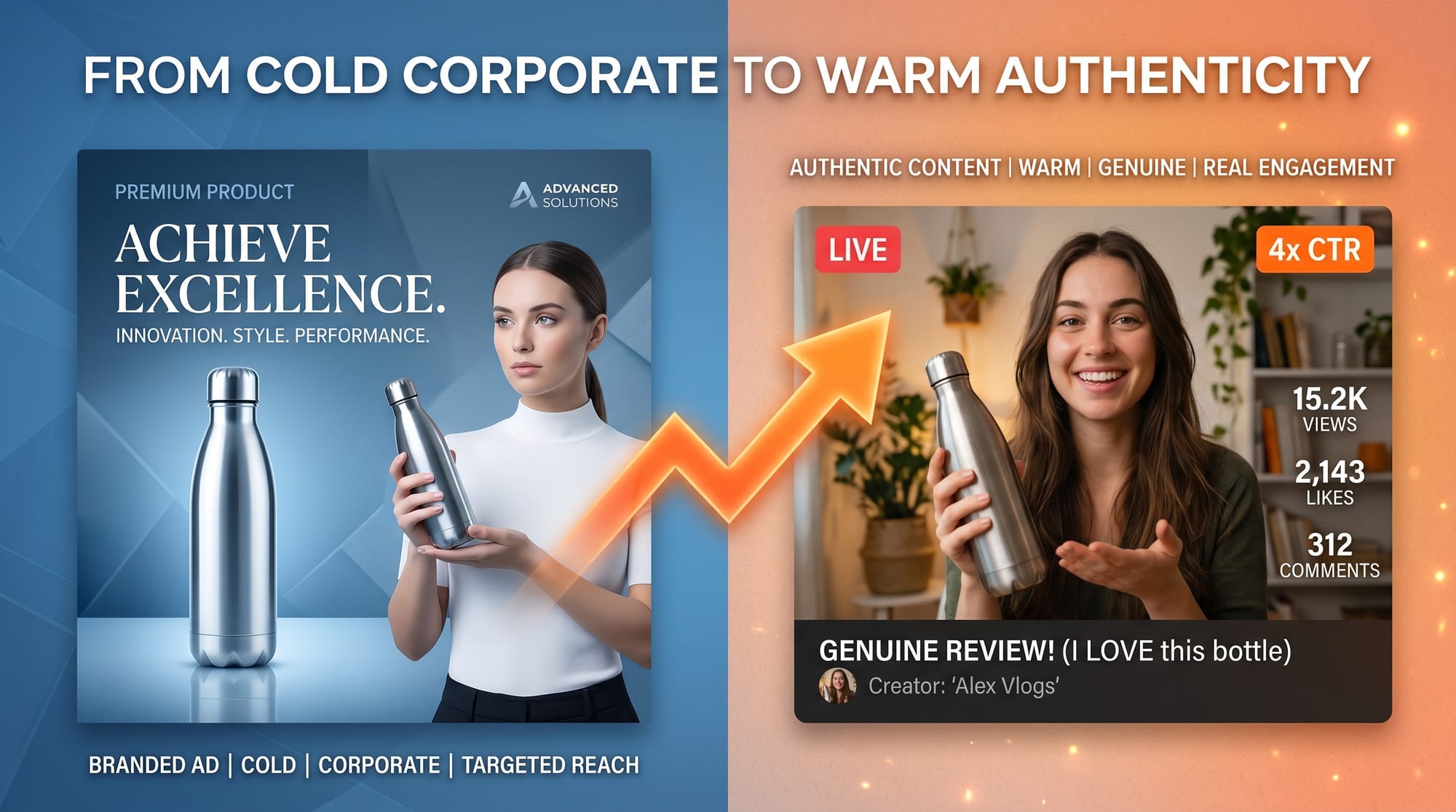
The performance data backs this up: UGC ads generate 4x higher click-through rates and 50% lower cost-per-click than standard ads. Conversion rates of 3-6% compare favorably to 1-3% for traditional ads. This means the same budget goes further - you get more clicks and more purchases per dollar spent.
There's also a production economics argument. A polished TV-style ad costs $5,000-$50,000 to produce. A UGC video from a creator costs $50-$500. You can test 20 UGC variations for the cost of one traditional creative.
Types of UGC Ads
Testimonial videos: A creator talks to camera about their genuine experience with the product. Specific results ('I lost 8 pounds in 6 weeks') outperform generic praise ('I love this product').
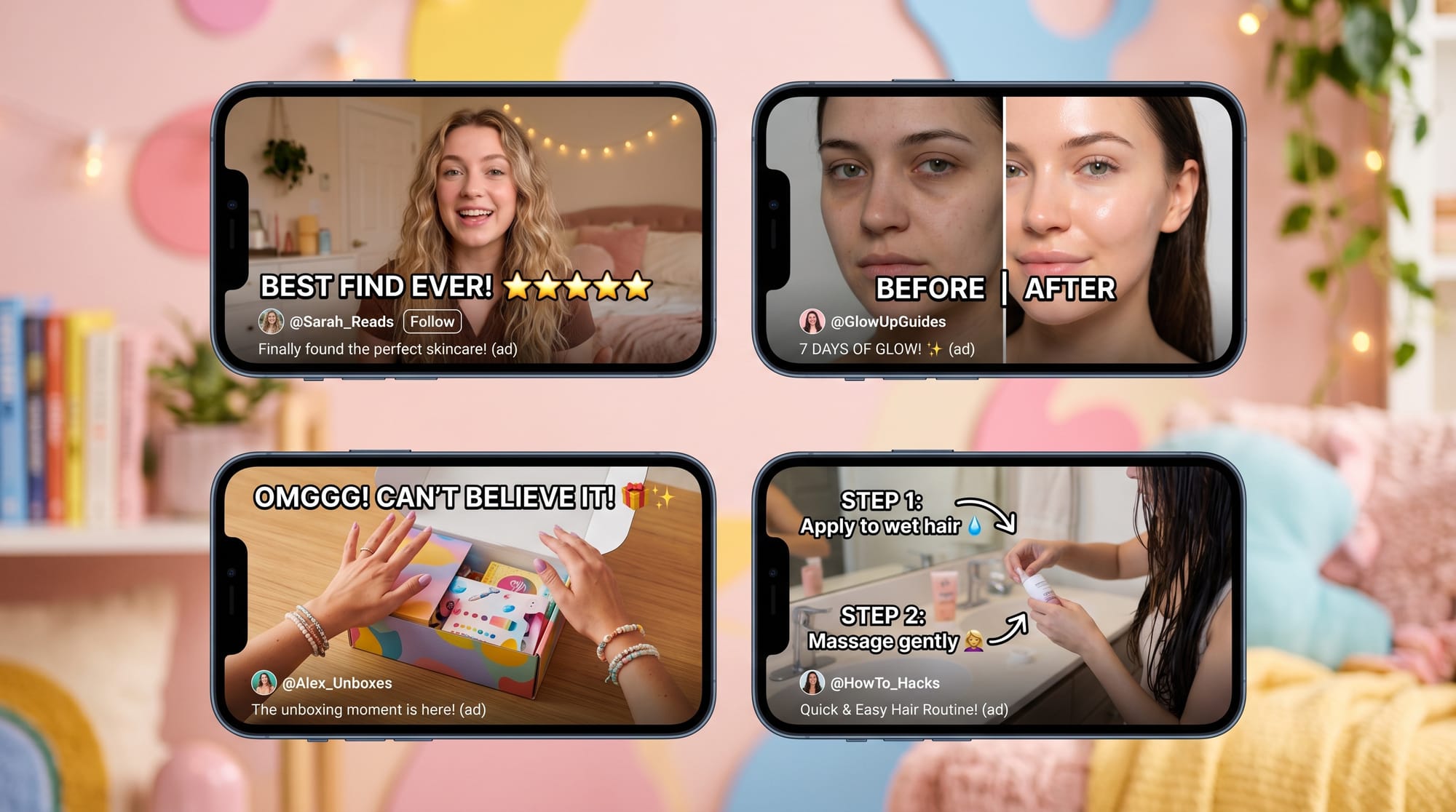
Before/after: Extremely effective for skincare, fitness, home improvement, and any product with a visible result. The transformation narrative is one of the most compelling ad formats across all platforms.
Unboxing and first reaction: High trust because the viewer gets to see a "real" first impression. Works particularly well for physical products with premium packaging.
Tutorial/how-to: Shows the product in use, answering the question 'how does this actually work?' simultaneously. Software products benefit especially from screen-recorded walkthroughs.
Day-in-my-life with product integration: The product appears naturally within someone's lifestyle content. Lower commitment for the viewer; converts well at the top of funnel.
Platforms Where UGC Ads Perform Best
Meta (Facebook/Instagram) is currently the highest-volume platform for UGC ad distribution. Reels and Stories placements favor raw, vertical video content that blends with organic feed. TikTok is close behind - native UGC style is essentially required for success there. YouTube Shorts and Pinterest are growing channels.
UGC ads that work on TikTok often work on Meta Reels with minimal editing. The reverse is less reliable - Meta-optimized UGC sometimes feels too "produced" for TikTok's native aesthetic.
How to Source UGC for Ads
Three main approaches:
- Commission UGC creators: Platforms like Billo, Insense, and Trend connect brands with creators who produce authentic-style content on demand. Typical cost: $100-$300 per video
- Repurpose customer reviews: Ask customers to record short video reviews in exchange for a discount or freebie. You own the content and it's genuinely authentic
- Influencer dark posting: Work with micro-influencers (10k-100k followers) to produce UGC-style content and run it as paid dark posts from their handle (also called whitelisting)
UGC Ad Creative Best Practices
- Hook in the first 2 seconds - no slow intros, jump straight to the payoff or problem
- Show the product being used, not just held up to camera
- Include specific, concrete results rather than vague claims
- Add captions - 85% of social video is watched without sound
- Test multiple hooks for the same body: often one hook drives 80% of performance
- Keep it under 30 seconds for Meta/TikTok unless the product requires demonstration
UGC Ads and the Anew Breeze Connection
If you're running UGC ads for a physical product, snoring solutions like nasal strips are a strong fit for UGC creative - the before/after format (peaceful vs snoring partner) and the testimonial format both map naturally to the product's promise.


