

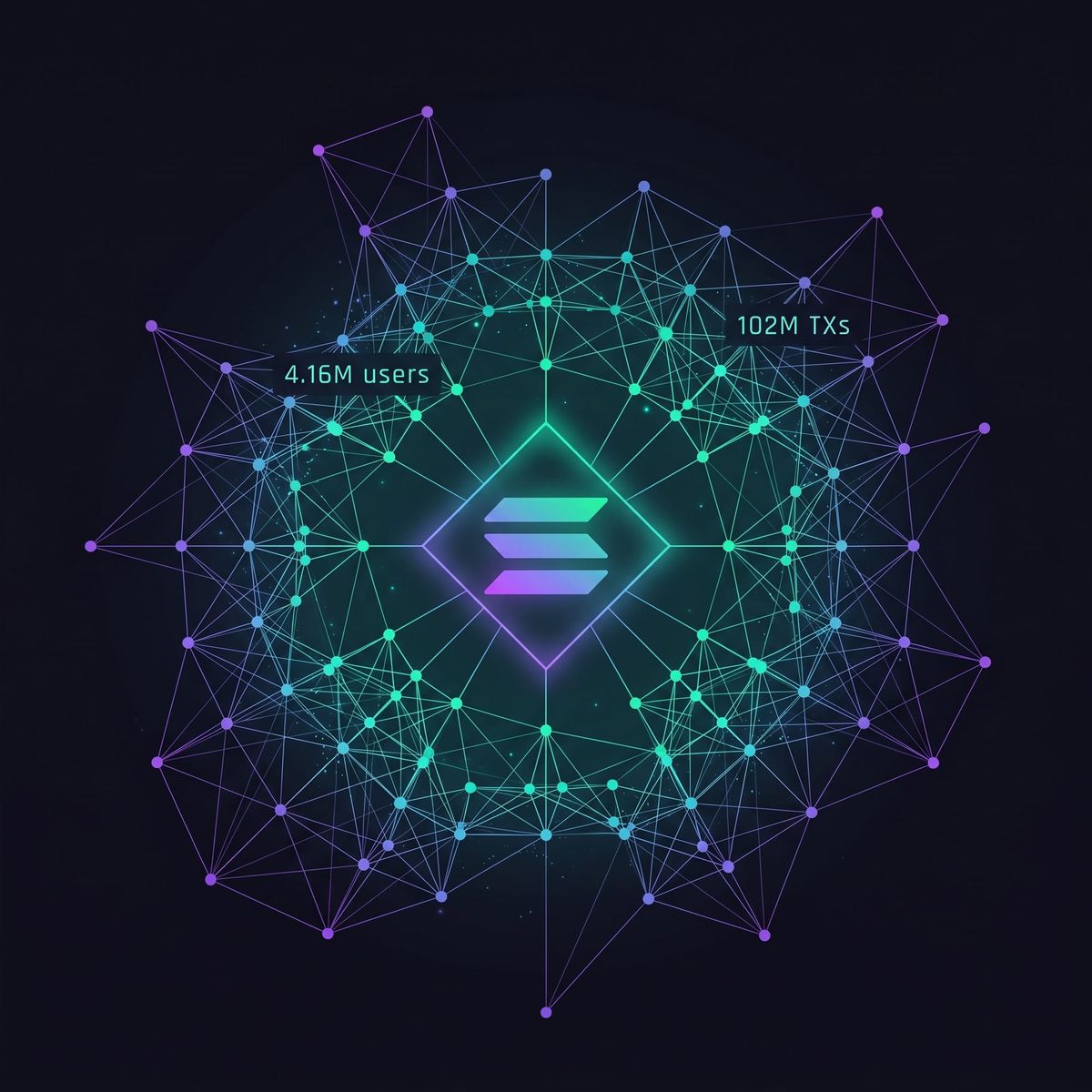
Solana has established itself as one of the most active and fastest-growing blockchain ecosystems in the world. From daily transaction volume to DeFi TVL to developer activity, the numbers tell a compelling story. Here are the most important Solana statistics for 2026, sourced from on-chain data.
Key Solana Statistics 2026
- 4.16 million daily active users (peak: June 5, 2026)
- 102.7 million transactions per day (average)
- 65,000 transactions per second (TPS) - theoretical peak
- 5,648 active validators (as of June 2026)
- 250 billion+ total transactions processed since mainnet launch
- $15.95 billion in stablecoins on Solana
- 2,100+ active dApps on the network
- SOL price: $67.11 (June 9, 2026)
- 400ms average block time
- $0.00025 average transaction fee
Solana Network Activity
Daily active users: Solana reached 4.16 million daily active users on June 5, 2026, its highest ever recorded. This milestone reflects cumulative growth across DeFi, NFTs, gaming, and consumer crypto applications built on the network.
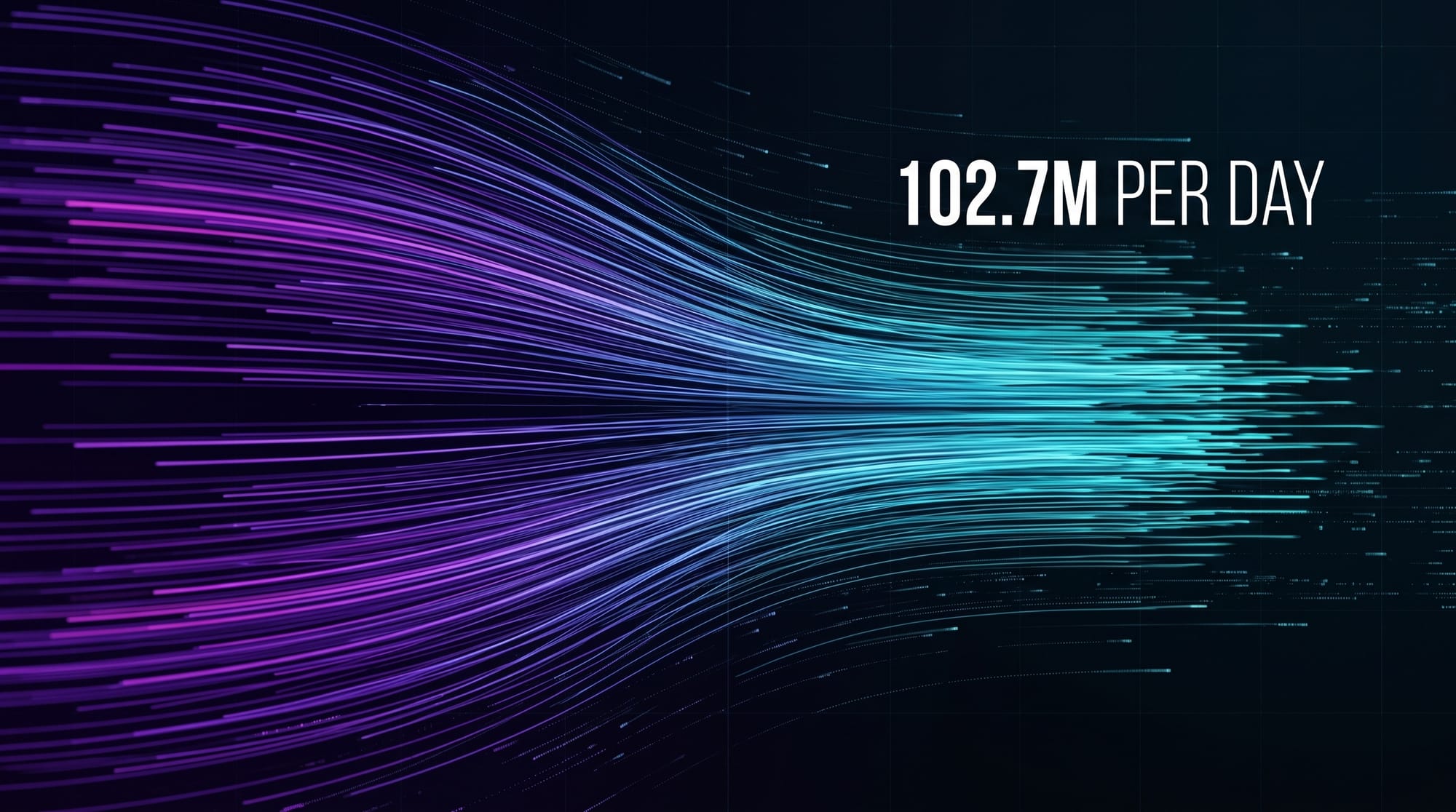
Transaction volume: The network processes an average of 102.7 million transactions per day. To put this in context, Ethereum processes roughly 1-1.5 million transactions per day. Solana's throughput advantage stems from its parallel transaction processing architecture (Sealevel), which executes non-overlapping transactions simultaneously.
Total transactions: Solana has processed over 250 billion transactions since mainnet launch in March 2020 - more than any other public blockchain.
Solana Speed and Fees
Transaction speed: Solana targets 65,000 TPS under optimal network conditions. Real-world throughput is typically lower (5,000-10,000 TPS sustained during peak load) but still orders of magnitude higher than Ethereum's ~15-30 TPS on L1.
Block time: 400 milliseconds per block, compared to Ethereum's ~12 seconds. This near-instant finality makes Solana practical for high-frequency applications like trading bots, gaming, and consumer payments.
Transaction fees: Average fee is approximately $0.00025 per transaction. At peak congestion fees can rise slightly due to priority fee mechanics, but Solana remains the cheapest major smart contract platform for end users.
Solana DeFi Statistics
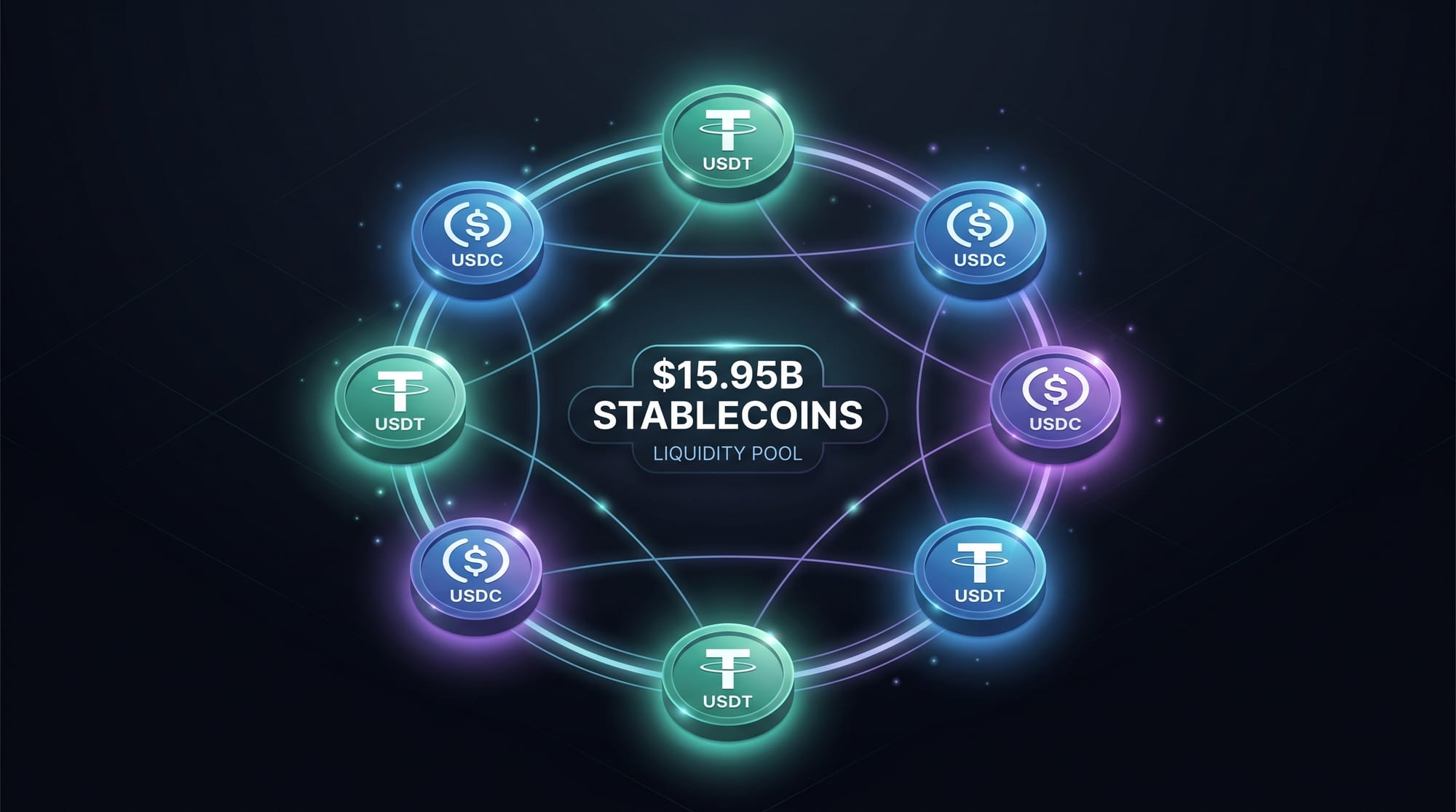
Total stablecoin supply: $15.95 billion in stablecoins on Solana (USDC, USDT, and others). This reflects deep liquidity for DeFi protocols and signals growing institutional and retail confidence in the network.
dApps: 2,100+ decentralized applications are active on Solana as of mid-2026. Key DeFi protocols include Jupiter (DEX aggregator), Raydium (AMM), Marinade Finance (liquid staking), and Kamino (yield). NFT activity is primarily through Tensor and Magic Eden.
Solana's DeFi ecosystem has grown significantly since the FTX collapse in 2022 temporarily depressed activity. The network recovered strongly through 2023-2025, with TVL and user counts reaching new highs.
Solana Validators and Decentralization
Validators: 5,648 active validators as of June 2026. While geographically distributed, Solana's stake concentration remains a point of discussion - the top 20 validators control a significant portion of stake weight. The Solana Foundation runs ongoing programs to decentralize stake distribution.
Nakamoto coefficient (the minimum number of validators needed to control 33% of stake) has improved over time and sits above 30 as of 2026, a meaningful improvement from early network conditions.
SOL Price and Market Data
SOL price: $67.11 as of June 9, 2026. SOL reached its all-time high of $260 in November 2021. After bottoming near $8 in late 2022 following the FTX collapse (FTX held large SOL positions), it staged a major recovery to hit $150+ in early 2024 and has traded in the $60-100 range through 2025-2026.
SOL is used to pay transaction fees (which are burned, creating deflationary pressure), to stake with validators (earning ~6-8% APY), and as collateral across Solana DeFi protocols.
Solana Developer Activity
Solana consistently ranks in the top 3 blockchains by developer activity. The Solana Breakpoint developer conference draws thousands of builders annually. Key developer tools include the Solana CLI, Anchor framework for smart contracts (programs), and the recently updated Solana Program Library (SPL).
The network's use of Rust (rather than Solidity) for smart contracts creates a steeper learning curve than Ethereum but attracts performance-focused engineers. TypeScript/JavaScript is also supported for client-side development.
Solana Outages: The Ongoing Challenge
Solana has experienced multiple network outages and degraded performance events since mainnet launch - a persistent criticism. There were 7 significant network incidents in 2023, 2 in 2024, and Solana engineers have cited improvements to consensus and scheduler code as reducing instability. No full network halt occurred in the first half of 2026.
Each outage episode triggers validator restarts coordinated through Discord, typically resolving within 4-18 hours. The engineering team has made network resilience a stated priority.


