

Snoring is far more widespread than most people realize - and its connection to obstructive sleep apnea makes it a genuine public health issue, not just a bedroom annoyance. Here are the most important snoring and sleep apnea statistics for 2026, drawn from peer-reviewed research and clinical data.
Key Snoring Statistics 2026
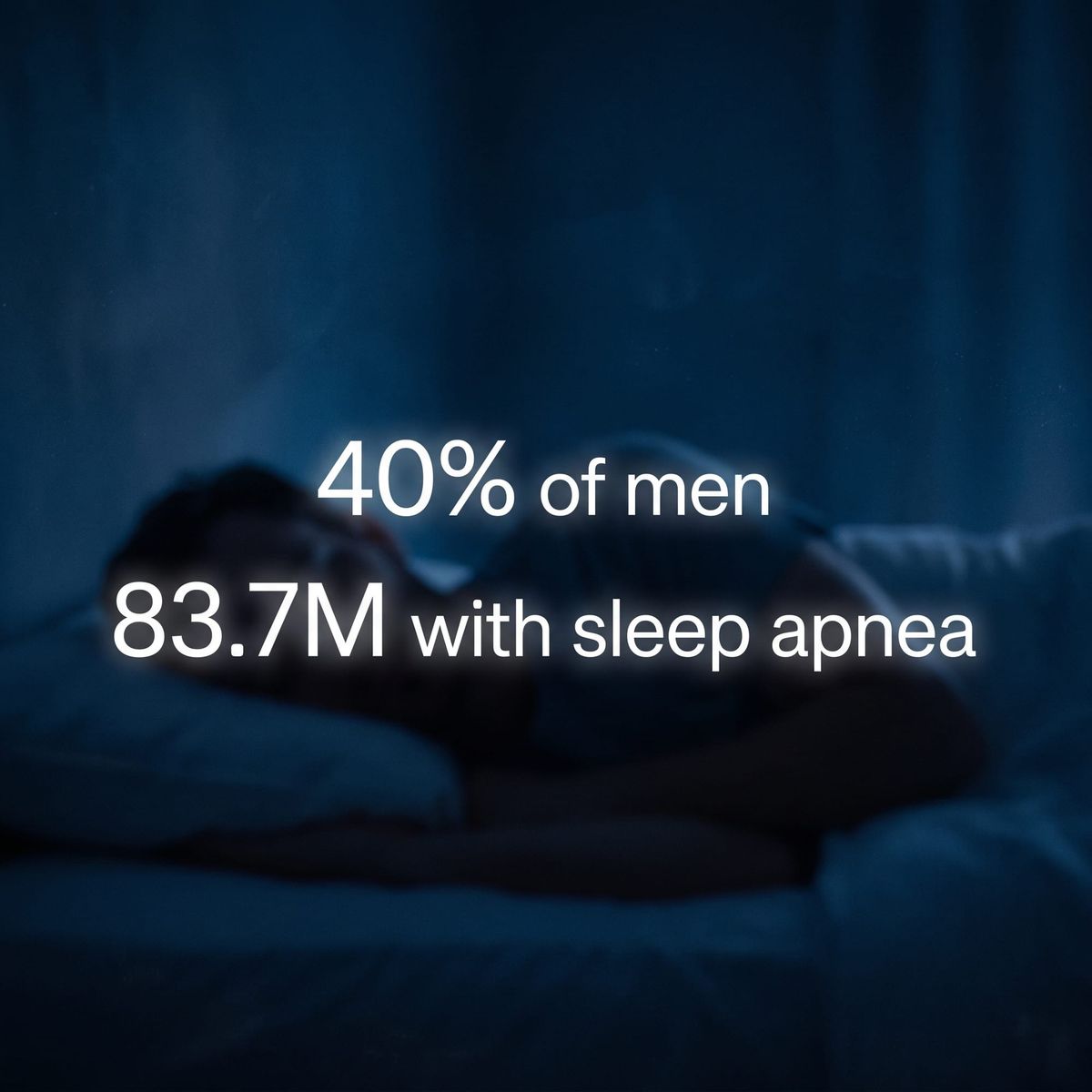
- 40% of adult men and 20% of adult women are habitual snorers
- 83.7 million US adults (32.4%) live with obstructive sleep apnea (OSA)
- 936 million adults globally (ages 30-69) have mild to severe OSA
- 425 million adults worldwide have moderate to severe OSA
- 80% of OSA cases in the US are undiagnosed
- 94% of people with OSA snore
- 70-95% of OSA patients snore as their primary symptom
- 24% of middle-aged men have OSA vs 9% of middle-aged women
- 56% higher OSA risk for adults over 65 compared to younger adults
- Snoring affects approximately 90 million Americans on some nights
How Many Adults Snore?
An estimated 40% of adult men and 20% of adult women are habitual snorers - meaning they snore regularly rather than only when congested or ill. When you include occasional snorers, the number climbs to roughly 90 million Americans who snore on some nights.

Snoring prevalence increases with age. In adults under 30, the rate is lower; in adults over 60, habitual snoring affects the majority of men and a substantial minority of women. Weight gain significantly increases snoring risk - extra tissue in the throat narrows the airway during sleep.
Snoring and Sleep Apnea: The Connection
Snoring and obstructive sleep apnea (OSA) exist on a continuum. OSA is defined by repeated partial or complete collapse of the upper airway during sleep, causing breathing pauses (apneas) of 10 seconds or more. Snoring is the sound produced by partial airway obstruction - it's a warning sign that full obstruction may follow.
94% of people with OSA snore, making snoring the most common OSA symptom. However, most snorers do not have OSA - only about one-third of habitual snorers have a diagnosable OSA condition. The presence of daytime sleepiness, gasping or choking sounds, and witnessed breathing pauses distinguishes OSA-related snoring from simple snoring.
Sleep Apnea Prevalence Statistics
United States: An estimated 83.7 million US adults aged 20+ have obstructive sleep apnea, representing 32.4% of the adult population (2024 estimate, ScienceDirect). This is substantially higher than older estimates of 18-22 million, reflecting both population growth and improved diagnostic criteria.
Global: Approximately 936 million adults aged 30-69 have mild to severe OSA (AHI 5+ events per hour). Of these, 425 million have moderate to severe OSA (AHI 15+), according to Lancet Respiratory Medicine estimates.
Undiagnosed: An estimated 80% of OSA cases in the US remain undiagnosed. Many people attribute their symptoms (fatigue, morning headaches, irritability) to other causes and never seek a sleep study.
Snoring by Gender
Men snore at twice the rate of women: 40% of adult men are habitual snorers versus 20% of adult women. The gender gap narrows significantly after menopause - estrogen and progesterone appear to have a protective effect on upper airway muscle tone. Post-menopausal women's snoring and OSA rates approach those of men of similar age.
Men are also more likely to have the anatomical risk factors for throat snoring: larger necks, more upper-body fat distribution, and greater tongue and soft palate volume relative to airway size.
Snoring by Age
Snoring becomes more common with age:
- Adults under 30: ~10-20% habitual snoring rate
- Adults 30-60: 30-40% (men), 15-25% (women)
- Adults over 60: majority of men; significant minority of women
- Adults over 65: 56% more likely to develop OSA than younger adults
Age-related changes include loss of muscle tone in the upper airway, tissue changes that make the airway more collapsible, and cumulative effects of weight gain over time.
Health Consequences of Snoring and OSA
Simple snoring without OSA has limited direct health consequences, though it disrupts partners' sleep. OSA, however, is associated with a significant range of health conditions:

- Cardiovascular disease: OSA roughly doubles the risk of hypertension; people with severe untreated OSA have 2-3x higher risk of cardiovascular events
- Type 2 diabetes: OSA is associated with insulin resistance and glucose dysregulation
- Depression: OSA patients have higher rates of depression and anxiety
- Motor vehicle accidents: OSA patients are 2-3x more likely to be involved in accidents due to daytime sleepiness
- Stroke: OSA is an independent risk factor for stroke
Economic Impact
A 2024 American Academy of Sleep Medicine (AASM) report estimated the annual economic cost of undiagnosed sleep apnea in the US at $150 billion, including healthcare utilization, lost productivity, and motor vehicle accidents attributable to daytime sleepiness from untreated OSA.
Related Reading
For information on over-the-counter snoring remedies, see our Nasal Strips for Snoring guide.
Sources
- ScienceDirect: OSA Prevalence in US (2024 Estimate)
- Lancet Respiratory Medicine: Global OSA Prevalence
- Sleep Advisor: Sleep Apnea Statistics 2026
- Sleeplay: Sleep Apnea Statistics and Facts 2026
- PubMed: Prevalence of Snoring in Adult Population
- PMC: Snoring Sounds and OSA Meta-Analysis
- AASM: Economic Cost of Undiagnosed Sleep Apnea


