

A credit card that replaces your hardware wallet.
That's the main pitch of Tangem, a crypto wallet that has sold over 6 million cards and convinced a lot of crypto holders to ditch their Ledgers for good.
But how exactly does a card with no screen, no battery, and no seed phrase keep your crypto safe? Can you really trust cold storage you can lose in a coat pocket? What happens if the cards are gone?
To find the answers to these and other questions related to security, setup, and real-world use, I ordered a set and tested it for six months.
You can get it by using my personal discount code: KRISTIAN
Here's my unbiased Tangem wallet review.
What is Tangem?
Tangem is a Swiss hardware wallet company founded in 2017 that stores your crypto on a physical card rather than a USB device.
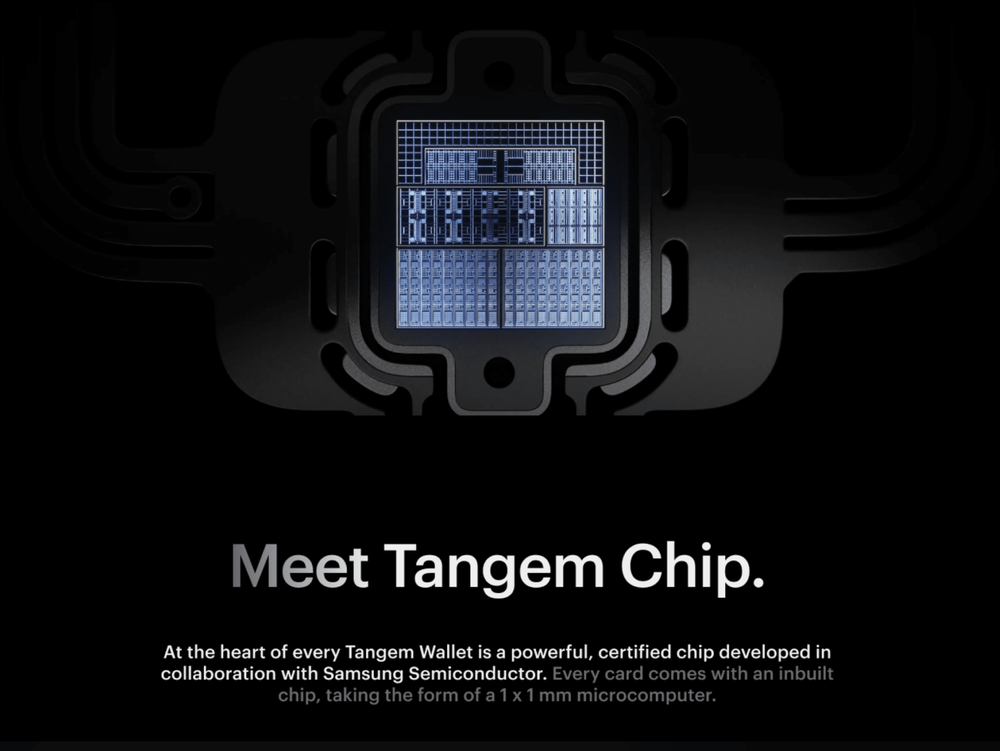
It comes as a set of two or three credit card sized NFC cards paired with a mobile app on iOS and Android. Each card has a Samsung EAL6+ certified secure chip inside that generates your private keys and keeps them there permanently.
If you're more of a minimalist or simply prefer not to carry a physical card, Tangem also offers the Tangem Ring. This is a ceramic ring that you wear on your finger and tap to your phone whenever you need to sign transactions or manage digital assets.
What makes Tangem different from most hardware wallets is the seedless setup. During activation, the private key is cloned to every card or ring in your set over encrypted NFC. Each becomes a standalone backup. Lose one, the others still give you full access. A 12 or 24 word seed phrase is available for users who want it, but most people never need it.
Unlike traditional hardware wallets, Tangem doesn't require charging or connecting to a computer. It also doesn't need an internet connection to store your crypto. The IP69K rating means the cards and ring handle water and dust without issue.
How Tangem Works
Tangem uses a true random number generator inside the card's secure element to create your private keys during setup. These keys stay on the chip and never leave it. No one, not even Tangem, can access them.
To send crypto using Tangem:
- Open the Tangem app and fill in the recipient address and amount
- Review the transaction details on screen
- Tap the card to your phone to sign and broadcast
The app is the interface that lets you prepare transactions or check balances. You can use it on any NFC enabled iPhone or Android device. The connection between the card and your phone runs on ISO 14443 (the same standard behind tap-to-pay bank cards like Visa and Mastercard).
You also create an access code during setup that is required every time you sign a transaction. Think of it as a PIN for your wallet. If six failed attempts are made, the card locks automatically.
To access DeFi apps, you connect through WalletConnect. The app simulates the transaction first, showing exactly what leaves your wallet before you commit. It also flags suspicious sites before you even connect.
The firmware on the card cannot be changed after it leaves the factory. You get what is installed, and it stays that way permanently.
If you are not ready to buy a card yet, Tangem also offers a free mobile wallet inside the same app. It is a hot wallet, meaning the keys sit on your phone rather than a chip. You get the same tokens and blockchains, minus the security that comes with keeping your keys completely offline.
A Closer Look At Tangem
I did not just want to scratch the surface with this review. So here's my deep dive into the different aspects of the Tangem hardware wallet.
Security and Trust
Tangem's security model is built around one principle: your private keys never leave the card. You already know that from earlier, but what backs that claim up are the audits.
The cryptocurrency wallet has been independently audited three times, by Kudelski Security in 2018, Riscure in 2023, and Cure53 in 2026 for the mobile app. None found backdoors. The app is fully open source on GitHub and can be reviewed by anyone.
Tangem also has immutable firmware. Once installed at the factory, it cannot be changed, which means no malicious update can ever be pushed to your card. The trade-off is that if a vulnerability is ever found, existing cards cannot be patched either.
The Tangem wallet set ships in sealed packaging and uses end-to-end chip certification to prevent tampered or counterfeit cards from activating. The app runs a cryptographic check to make sure the card is genuine the moment you scan it for the first time.
Setup and Ease of Use
Tangem is refreshingly simple in that it skips everything you'd normally dread about setting up a hardware wallet. I just had to download the Tangem app, tap the card I'd received, and set an access code. The whole process takes about two to three minutes.
Tangem also lets you set up Face ID or Touch ID in case you'd rather not type your access code every time. This makes day to day use faster when you just want to check a balance.
You can set up to 20 separate accounts on a single wallet. I found this useful for keeping savings and spending separate. Tangem also shows a full transaction simulation before you sign anything. Plus, it lets you pay network fees in USDT or USDC for selected cryptocurrencies, removing the need to hold ETH or other native tokens just to move funds.
Unlike other hardware wallets, you don't need to write down a seed phrase or connect to a desktop to get started. That alone cuts out two of the most frustrating parts of setting up crypto storage.
Supported Assets and Networks
A crypto wallet is only as good as the assets and networks it supports. So that's what I checked next after setting up Tangem.
And I was pleased to see that the Tangem wallet supports all major coins and networks, including:
- Bitcoin, Ethereum, XRP, Solana, BNB, Cardano, Toncoin, Litecoin, Polkadot, NEAR, Kaspa, Cosmos, and Avalanche
- Token standards including ERC-20, BEP-20, TRC-20, and SPL
- EVM compatible chains like Arbitrum, Optimism, Base, Polygon, Linea, and zkSync Era
- Newer networks like Aptos, Sui, Sei, and Alephium
Tangem also lets you pick which network to use when sending the same coin. Compared to Ledger, where you're mostly defaulted to ERC-20, you have more flexibility here and can avoid higher transaction fees.
Plus, Tangem has a native NFT tab inside the app that displays your collectibles directly. Although NFTs are less popular than they once were, this is still a convenient addition for those who hold them.
Hands-On with Tangem
This is the part I was most excited to cover. Tangem comes with a range of handy features that make it simple to store and manage crypto.
Some of the notable ones include:
Tangem Pay
Tangem Pay is a virtual Visa card built into the Tangem app that lets you spend USDC directly from cold storage. You can use it anywhere Visa is accepted, and Apple Pay and Google Pay both work with it.
To use it, you complete a quick KYC verification for the payment account only. Your main Tangem wallet stays completely private. Note that the KYC is handled by a separate partner and never touches your wallet itself.
To be transparent, I wasn't able to test this myself since it's not available in the EU yet. But if you're in the US, Latin America, or Asia-Pacific, it should work for you.
Yield Mode
Tangem also has Yield Mode, which lets your stablecoins earn passive income. You just toggle it on for USDT, USDC, or DAI, and Tangem handles the rest. Yields range from 2 to 4% APY and your assets stay liquid the entire time.
But keep in mind that Tangem does this through Aave, a DeFi lending platform. In other words, the returns are not fixed and there is a small risk that a bug in the platform's code could affect your funds.
Native Staking
Tangem supports native staking for Solana, Ethereum, BNB, Tron, Cardano, and Cosmos directly inside the Tangem mobile app. You just need to pick an asset and tap to delegate.
The app suggests validators with the highest APR by default, but advanced users can also pick their own from an open list.
Your private keys stay on the Tangem chip throughout, and you can track rewards, APY, and unbonding periods from the same interface.
Tangem Express
I am not a fan of sending crypto to an exchange just to swap it. But it's something you have to do with most wallets. Tangem, thankfully, eliminates that hassle by letting you swap directly within the app using your card to sign off.
Tangem Express is a built-in swap aggregator that finds you the best rate across multiple providers. You pick what you want to trade, and it does the rest. I, for example, swapped USDT to SOL without touching an exchange or paying withdrawal fees. Tangem also supports cross-chain swaps and everything is KYC-free.
If you need more flexibility, Tangem also offers a Send via Swap function. This lets you send one token and have it automatically converted so the recipient receives a different one, without you having to swap first and then send separately.
Buy and Sell
Buying and selling crypto inside Tangem is simple. You can buy crypto anytime directly from the app using a credit card or Apple Pay through integrated partners like MoonPay and Mercuryo. No need to go through a separate exchange or third party wallet.
When it's time to cash out, you can sell your tokens back into fiat and have the balance sent directly to your bank account.
WalletConnect and DeFi
Tangem has a built-in WalletConnect feature that lets you connect to DeFi apps and Web3 platforms from your mobile device. Think of it as a universal key to the wider crypto world.
Unlike other cold wallets that require a desktop or browser extension, Tangem lets you connect by scanning a QR code. Once you're in, you can:
- Swap tokens on decentralized exchanges like Uniswap or PancakeSwap
- Lend crypto and earn interest on platforms like Aave
- Buy and sell NFTs on marketplaces like OpenSea
- Connect to blockchain games and keep your in-game assets safe
Your private keys never leave the Tangem chip, and nothing gets authorized without a physical tap of the card. Your funds stay offline until you need them.
Compared to keeping funds in a trust wallet just to access DeFi, this is a meaningful upgrade. You get the self custody of cold storage without giving up access to Web3.
Tangem pricing
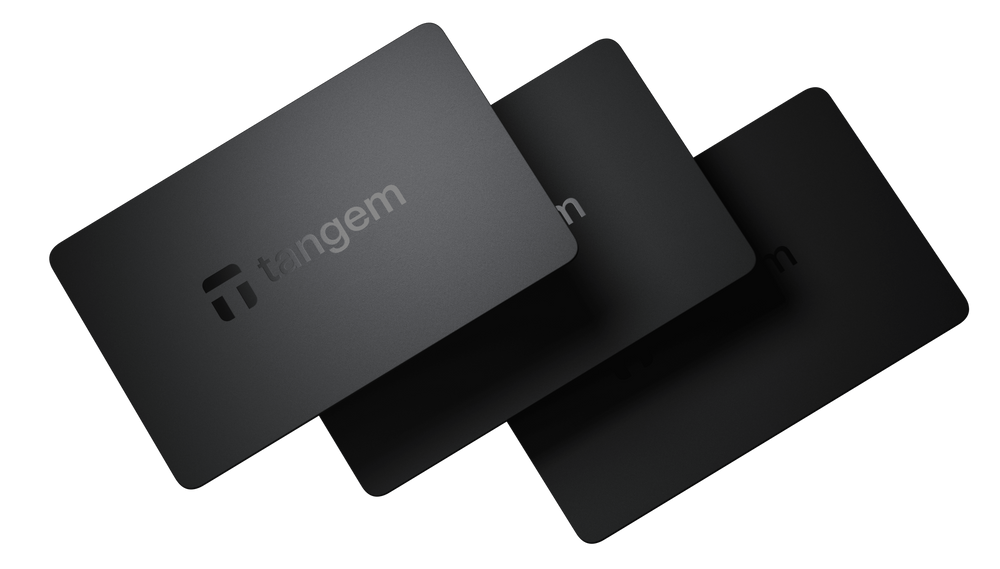
When I first started looking into cold wallets, price was always a hurdle. Most of the things I saw cost well over $100, and that usually just got you a single device with a fragile screen and a battery.
Tangem is a refreshing change in that regard. It replaces those clunky mini-computers with a sleek, ultra-durable card that works with a simple tap against your phone.
So how much do you pay? Based on the official store, here is what Tangem cards cost:
- 3-card set ($69.90): The setup I went with. One primary card and two backups to store in separate secure locations. Most people recommend this one.
- 2-card set ($54.90): A solid entry point for casual users. One primary card and one backup.
- Family Pack ($139.90): Six cards across multiple wallets, good for households.
- Tangem Ring plus 2 cards ($160): Same security in a wearable form.
There are no subscription fees and no hidden charges. You buy the Tangem cards once and own them for life, backed by a 25-year warranty.
I also found it reassuring how Tangem handles loss or damage. With other wallets, a broken device means scrambling to recover access. With Tangem, because all cards in the same wallet share the same key, losing one just means using another.
Free shipping applies on orders above $89, and local taxes or VAT may apply depending on where you order from.
Tangem vs Competitors
Although Tangem impressed me on price, I wanted to see how it held up against the alternatives because, you know, a good deal means nothing if something else does the job better.
Here is how it compares:
Feature | Tangem | Ledger Nano X | Trezor Model T | CoolWallet Pro | Software Wallets |
Form Factor | Card | USB / Screen | USB / Screen | Card with Screen | Mobile App |
Connection | NFC | Bluetooth / Cable | USB-C | Bluetooth | Internet |
Battery | No | Yes | No | Yes | N/A |
Backup Method | Multi-card | Seed phrase | Seed phrase | Seed phrase | Seed phrase |
Starting Price | $54.90 | $149 | $179 | $149 | Free |
Tangem vs Ledger Nano X
Ledger uses a screen, physical buttons, and a battery, and requires you to write down a seed phrase. Tangem removes that entirely by cloning your wallet across backup cards over an encrypted NFC connection.
At $149, a single Ledger Nano X costs more than double the price of Tangem's three-card set. If you want on-device address verification before signing, Ledger is the better pick. If you want mobile-first cold storage without the seed phrase overhead, Tangem wins.
Tangem vs Trezor Model T
Trezor is fully open source and connects via USB to a desktop. You can verify exactly what the hardware and software are doing at every level. Tangem cannot offer that.
What Tangem offers instead is a mobile-first setup that takes two minutes and fits in your wallet. For most people, that trade-off makes sense.
At $179, Trezor is also the most expensive option in this comparison.
Tangem vs CoolWallet Pro
CoolWallet apparently uses the same card form factor as Tangem. However, there's a screen and a rechargeable battery inside, meaning you still have something to charge and something that can wear out over time.
Tangem does not have either of those, but it also costs less than half the price at $69.90 for three cards versus CoolWallet Pro's $149. If a screen on the card matters to you, CoolWallet is the pick. If not, Tangem is the easier choice.
Tangem vs software wallets
Software wallets like MetaMask and Trust Wallet keep your private keys on an internet-connected device. One bad link in a Discord or Telegram chat and your funds are gone.
Tangem keeps your keys locked inside an EAL6+ chip, the same security tier used in biometric passports. Hot wallets are free, but they were never built for long term storage. For anyone holding more than they can afford to lose, Tangem is worth the $55.
Who Is Tangem Best For
Let's be real: Tangem is not going to be the perfect match for every crypto holder. But if you fall into one of these categories, it is easily one of the best choices you can make.
Crypto newcomers and casual investors
If you're new to crypto and the thought of managing seed phrases and desktop software already puts you off, Tangem removes all of that from the equation. Setup takes a few minutes, the app feels like any other banking app on your phone, and there is nothing technical to figure out.
Mobile-first users and frequent travelers
Tangem fits in your wallet alongside your cards and cash. It doesn't need charging, cables, or a desktop to work. As such, it's the only cold storage option I've come across that genuinely fits a phone-first lifestyle.
Long-term holders
If your plan is to buy and hold for years, Tangem is built for exactly that. The cards have no battery to degrade, no screen to crack, and the firmware is frozen at the factory. Store backups in separate secure locations and you have a setup that can sit untouched for decades without anything breaking down.
Budget-conscious buyers
You do not need to spend $150 or more to get serious cold storage. Tangem gives you an EAL6+ secure chip, the same tier used in biometric passports, starting at $54.90. Complete control over your funds without paying for a screen you do not need.
Tangem Pros and Cons
No crypto device is flawless, so weighing the real-world trade-offs is essential before moving your funds over to cold storage. Let’s look at what makes the Tangem wallet worth considering, along with a few of its limitations.
Tangem pros
- No battery or screen to fail: Traditional options use lithium-ion batteries that degrade and screens that crack. Tangem’s solid-state card form factor lasts for decades without physical maintenance, making it an ideal choice for long term storage.
- Zero human error with seed phrases: Writing down words on paper creates a single point of failure for theft or loss. Tangem bypasses this entirely during setup, generating your keys directly on the chip to enhance security.
- Elite physical durability: The cards carry an IP68 weatherproofing rating. They can survive being submerged in water, dropped, or stepped on without damaging the internal tangem firmware.
- True multi-device backup system: Buying a 3-pack lets you clone the same wallet architecture across multiple physical tangem devices. You can easily hide your extra cards in separate, secure locations.
- Frozen firmware architecture: The microchip code cannot be updated or altered after it leaves the factory. These strict security practices remove the risk of a malicious software update compromising your keys.
- Incredible on-the-go utility: You do not need cables or laptops to manage your assets. The app provides a beautiful, sleek interface that lets you authorize trades with just a tap via a localized secure connection.
Tangem cons
- No on-device confirmation screen: You must trust the visual output of the app's user interface when signing transactions. Because you lack a physical screen on the card, you cannot independently double-verify destination addresses away from your phone.
- The absolute loss trap: If you lose your primary card and your backups, you will permanently lose access to your funds. There is no fallback master seed phrase written on paper that can recover your account.
- Forced reliance on a smartphone: Because the device has no screen or buttons of its own, you cannot use Tangem without downloading the companion app from the Google Play Store or iOS App Store on an NFC-enabled phone.
- Limited advanced feature sets: While it functions perfectly as a high-powered Ethereum wallet and handles a diverse portfolio of assets, it lacks heavy power-user tools. It does not natively support running your own full Bitcoin node.
Tangem or No Tangem?
Look, Tangem is not the last wallet you will ever consider. With the speed at which the crypto wallet market is evolving, there will be tons of new options in the next few years.
But from what I've tested, Tangem is really solid in terms of what it offers. It lets you store crypto without the seed phrase stress. You can sign with just a tap. And there's a ton of security backing it up at a price that's hard to beat.
So if you're serious about self custody, Tangem right now is a great choice.