
I may earn a small commission if you buy through my links, at no extra cost to you. Disclosure
Does chewing gum help your jawline? Short answer: chewing gum can make your jaw muscles stronger, but there is no good evidence that it changes the shape of your jawline or face. The best study so far followed people who chewed gum three times a day for six months. Their bite got stronger. Their jaw muscles and jaw bone didn't change shape.
I have chewed mastic gum almost every day for about two years, so I'm not anti-gum. I just don't buy the TikTok promise. Here is what the scientific research says about jawline gum, what actually shapes your jawline appearance, and when excessive gum chewing can hurt your jaw.
The short answer
- Chewing gum is exercise for your masseter muscles, the main chewing muscles at the back of your jaw.
- Studies show gum chewing can raise bite force within weeks.
- A six-month trial found no change in masseter thickness or jaw shape.
- Your facial structure is mostly set by genetics, bone structure and body fat, not by a chewing routine.
- Very hard gum, chewed for hours, can cause jaw pain and headaches.
What chewing gum actually does to your jaw muscles
Every time you chew, you work the masseter. Like any other muscle, it responds to resistance, so gum chewing is a kind of exercise. The research backs that part up: gum can strengthen your bite.
In a small 2018 study, 19 young adults chewed gum for five minutes twice a day for four weeks. Their maximum bite force went up by about 23%. A larger 2023 trial in 211 older adults found a similar effect after two months of daily gum training.
The most useful study for the jawline question is a randomized controlled trial from Yonsei University in South Korea, published in 2024. Fifty-eight healthy adults either chewed gum three times a day for six months or didn't. The gum group got a stronger bite. But the researchers found no significant difference in masseter thickness or the shape of the lower jaw.
So the honest answer is: chewing gum trains your jaw muscles for strength and function, but in healthy adults it hasn't been shown to make your jaw bigger, more muscular or more pronounced. Strength and jawline definition are not the same thing.

Why chewing gum won't reshape your jawline
A defined jawline is mostly about bone, not muscle. The shape of your jaw bone, your chin and your cheekbones comes from genetics, and adult bone doesn't remodel because you chew gum. Genetics also determine where your body stores fat.
Medical News Today lists genetics, bone structure, fat distribution and skin quality as the main factors behind how your jawline looks. With age, loose skin and lower skin tone can soften the line under your chin. Healthline adds that you can't spot-reduce fat from one area of your body, including your face and neck. Chewing burns very few calories, so it won't slim your face either.
There's also a catch with muscle growth. If chewing did make your masseters much bigger, experts quoted by ADA News point out that it could make your face look squarer or wider, without sharpening the underside of the jaw that people usually mean by a chiseled jawline.
What is jawline gum?
Jawline gum, or jawline chewing gum, is extra-hard gum marketed as a jaw workout that can tighten and lift your face. Brands like Jawliner, Rockjaw, Stronger Gum and Titans Jaw sell it with before-and-after photos and promises of a sharper face. Some are synthetic hard gums, and many are mastic gum, a natural tree resin from the Greek island of Chios.
The idea is simple: if regular gum is a light exercise, a harder gum should build more muscle and lead to a more defined jawline. The claims go further than the evidence. Science News looked at the trend in 2026 and found that three of the five biggest mastic gum brands on TikTok promote jaw sharpening. An orofacial medicine expert from USC told the magazine there's no research to back up those claims.
Is mastic gum better for your jawline?
Mastic gum is firmer than regular gum, especially in the first minutes, so it gives your jaw more to work against. But no study has tested mastic gum on jaw muscles or face shape. The research behind mastic is about other things, like oral bacteria, bad breath and some stomach issues. I go through that in mastic gum benefits.
If you want to see how two of the popular brands compare, I wrote Greco Gum vs Titans Jaw.
Risks of chewing hard gum for your jaw
Regular sugar-free gum is fine for most people. The American Dental Association even says chewing sugarless gum for 20 minutes after meals helps your mouth wash away acids and prevent tooth decay. The concern is hard gum chewed for long periods, which can put strain on the temporomandibular joint (TMJ), the hinge that connects your jaw to your skull.
- Jaw pain and TMJ problems: the ADA warns that intense, regular chewing of dense gum may cause jaw pain and headaches and raise your risk of TMJ disorders. If you already have a TMJ disorder, the ADA says to avoid gum altogether.
- Cracked teeth: dentists warn that extra-hard gum can chip or crack teeth, especially teeth weakened by cavities.
- Dental work: very hard gum can pull on fillings, crowns and braces. Greco Gum, the brand I use, warns about this on its own site.
- Muscle overload: chewing for hours a day can overwork the jaw muscles and cause tightness, discomfort and stress on the joint. Some people end up clenching or grinding more.
To be fair, the evidence on gum and TMJ is mixed. A small 2025 study of 66 young adults found no clear link between gum habits and TMJ disorders. Still, if your jaw clicks, aches or locks, or it hurts to speak or eat, stop and see a dentist. It's worth getting checked by someone who specializes in dentistry or TMJ problems.
What about mewing?
Mewing is the other big jawline trend: a technique where you rest your whole tongue flat against the roof of your mouth. It's named after British orthodontist John Mew and was popularized by his son, Mike Mew, and it's often paired with jawline gum in the same videos. The American Association of Orthodontists said in 2024 that there is no scientific evidence that mewing reshapes the jawline, and that the potential risks outweigh any unproven benefits.
What actually helps your jawline
- Fat loss: if you carry extra weight, weight loss is the change most likely to give you a more defined jawline. You can't target your face or neck, but they change along with the rest of your body.
- Posture: pushing your head forward softens the line under your jaw. Standing tall makes it look sharper, at least in photos.
- Skin care and sun protection: skin loses firmness with age and sun damage, which blurs the jawline. Protecting your skin is good for your health anyway.
- Professional options: fillers, Botox and fat-reduction injections exist, but they're medical treatments with costs and side effects. Talk to a board-certified dermatologist or plastic surgeon, not TikTok.
Why I still chew mastic gum every day
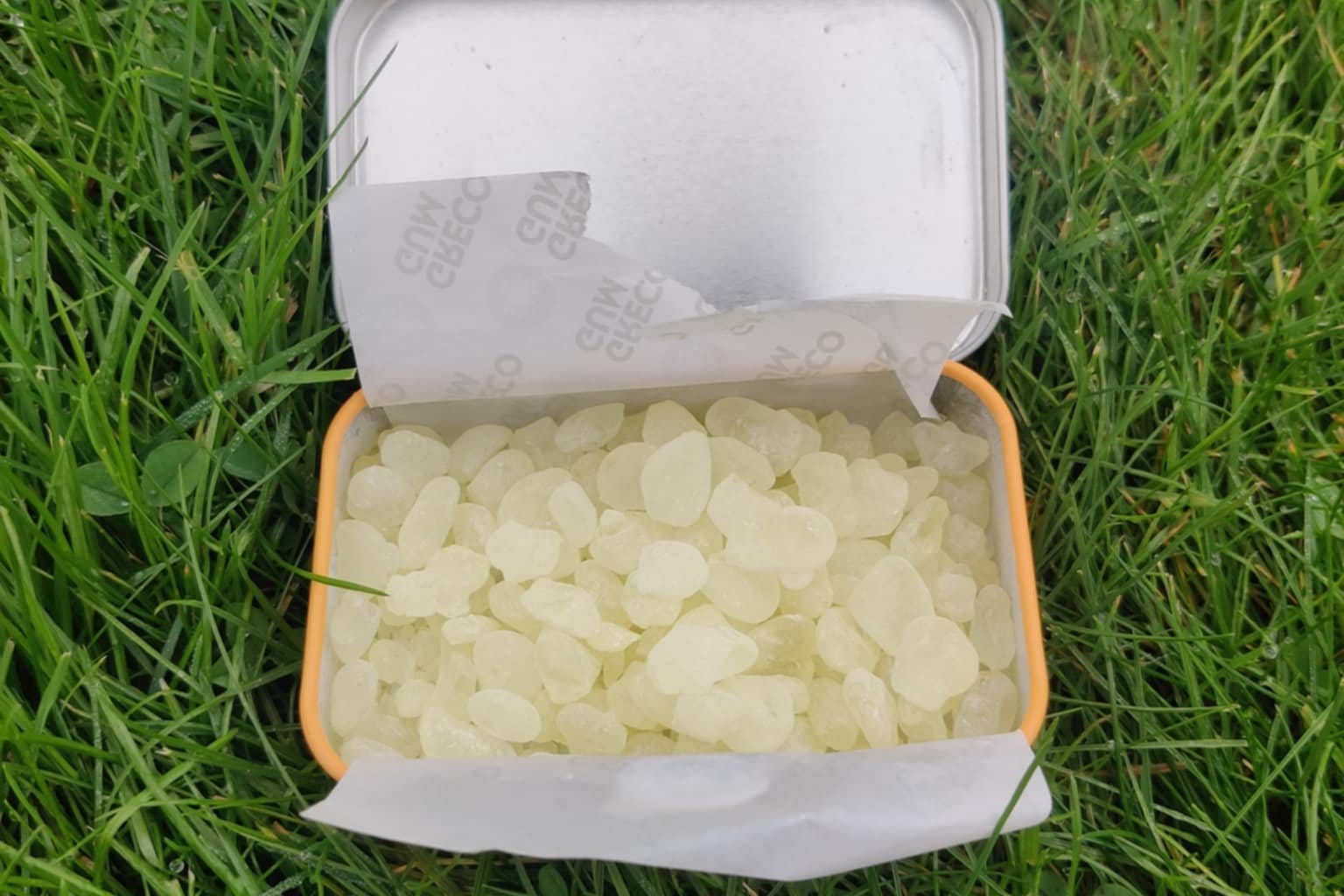
I chew mastic gum because I wanted to get away from regular gum, which is built on a synthetic gum base. Mastic is one ingredient, a tree resin, with no sugar or sweeteners. My jaw does feel stronger after two years, but I don't expect it to change my face, and I wouldn't tell you to buy it for that.
The brand I use is Greco Gum. You can read my full take in my Greco Gum review.
Frequently asked questions
How long should you chew gum for your jawline?
There's no proven routine, because there's no proven jawline effect. Note that more chewing isn't better. The bite-force studies used short sessions, from five minutes twice a day to three sessions a day. Chewing hard gum for hours is more likely to cause jaw pain than results.
Can chewing gum make your face wider?
Possibly, if it made your masseters much bigger, which is why some experts say heavy chewing could give a squarer face rather than a sharper jawline. The six-month trial didn't find a change in masseter thickness, though.
Does chewing gum help with a double chin?
No. A double chin is mostly fat under the chin, and chewing doesn't burn fat from one spot. Overall weight loss, posture and age matter more.
Is jawline gum safe?
For most people, chewing it in moderation is fine. Skip it if you have a TMJ disorder, jaw pain, weak teeth or a lot of dental work, and stop if your jaw starts to ache.
Does mastic gum help your jawline?
Not in any study so far. Mastic gum works your jaw like any firm gum, but its research-backed benefits are about oral health and digestion. See mastic gum side effects before you start.
Sources
- Jung et al. (2024), Effects of gum chewing training on occlusal force, masseter muscle thickness and mandibular shape (J Oral Rehabil)
- Shirai et al. (2018), Effects of gum chewing exercise on maximum bite force
- Kashiwazaki et al. (2023), Improvements in maximum bite force with gum-chewing training in older adults (J Clin Med)
- Science News - "No, mastic gum won't reshape your jaw" (2026)
- Medical News Today - Does chewing gum help your jawline?
- Healthline - Does chewing gum help your jawline?
- ADA News - Experts expose legitimacy of facial fitness gum
- American Dental Association (MouthHealthy) - Chewing gum
- Yushchenko et al. (2025), Association between gum chewing and temporomandibular disorders (J Clin Med)
- Dental Products Report - AAO warns against mewing (2024)