
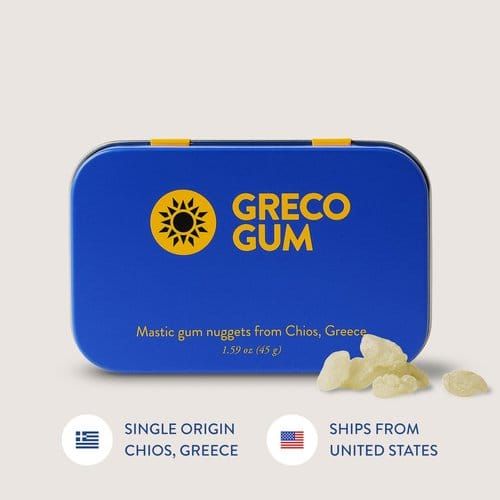
Mastic gum has been chewed for stomach and breath issues for literally thousands of years, and more recently it's exploded on TikTok as a supposed jawline hack. I've written before about my own experience chewing it daily, but I wanted to step back and separate what the actual research supports from what's just marketing. Some of the benefits people talk about hold up reasonably well under scrutiny. One very popular claim does not.
What Is Mastic Gum?

Mastic gum is a resin harvested from Pistacia lentiscus, a tree that grows almost exclusively on the Greek island of Chios. Farmers score the bark, the resin oozes out and hardens into small, irregular "tears," and those tears are collected, cleaned, and sold either whole (to be chewed like gum) or processed into oil, powder, and capsules. People on Chios have used it this way for centuries, originally for stomach complaints, bad breath, and skin issues, long before anyone had identified the specific compounds responsible.
Backed by Research
Fighting H. pylori Bacteria
H. pylori is a bacterium linked to gastritis and stomach ulcers, and it's one of the more studied targets for mastic gum. Lab studies have found that mastic gum extract can kill H. pylori in vitro, including strains resistant to certain antibiotics, and animal studies have shown meaningful reductions in bacterial load after extended dosing. Human trial results are more mixed: a small randomized pilot study found that mastic gum led to H. pylori eradication in some patients, though at a lower rate than standard triple antibiotic therapy, while at least one earlier study found no measurable effect on H. pylori load in humans. The honest summary is that mastic gum shows real antibacterial activity against H. pylori in the lab, with promising but inconsistent results in people.
Supporting Gut Health and Digestive Comfort
The best human evidence for mastic gum's digestive benefits comes from a randomized, double-blind, placebo-controlled trial in patients with functional dyspepsia, a condition involving recurring stomach pain, bloating, and discomfort without a clear structural cause. In that trial, 77% of patients taking Chios mastic gum reported symptom improvement, compared to 40% on placebo, with the biggest gains in stomach pain and heartburn. That's a genuinely solid result for a natural product, though it's specific to functional dyspepsia rather than digestive issues in general.
Reducing Oral Bacteria and Bad Breath
Mastic's antibacterial properties extend to the mouth. A 2025 randomized clinical trial found that a mastic-based toothpaste improved halitosis and gum health markers in orthodontic patients, and separate lab research found that mastic resin reduced the bacteria responsible for the compounds that cause bad breath within minutes of exposure. This is one of the more consistently supported uses of mastic gum, and it lines up with why people have chewed it for fresh breath for a very long time.

Anti-inflammatory and Antioxidant Compounds
Terpenes make up the majority of mastic resin by weight, and several of these compounds, along with flavonoids and triterpenic acids, have shown anti-inflammatory and antioxidant activity in lab studies. Some research also suggests mastic gum may help protect the gut lining and reduce inflammatory markers in the body. This research is real, but much of it is still preclinical or based on small trials, so it's best read as a promising direction rather than a settled fact.
Not Backed by Research
The "Jawline Sculpting" Claim
This is the one that needs to be said plainly: there is no published research showing that chewing mastic gum sharpens, defines, or reshapes your jawline. The claim went viral on TikTok as part of the broader "looksmaxxing" and "mewing" trend, and several gum brands now market almost entirely around it.
Science News examined the claim directly and reported that mastic gum "won't turn your jaw into granite," even though it's a legitimate antibacterial agent for oral health. A 2024 study found that chewing regular gum three times a day for six months produced no visible change in jawline appearance, and a separate 2024 study found that gum-chewing training increased bite force without changing facial shape. Doctors interviewed about the trend have generally been skeptical that any amount of chewing meaningfully alters jaw bone structure in adults.
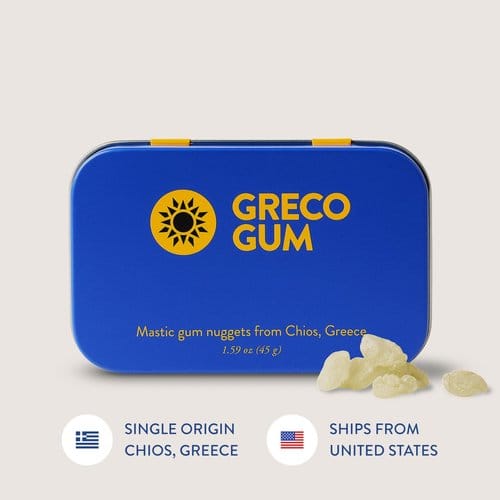
Greco Gum
Raw Chios mastic gum nuggets, 100% pure resin with no additives or sweeteners.
If you enjoy chewing mastic gum and think your jaw feels stronger, that's plausible - the masseter is a muscle, and muscles respond to resistance. But "feels like it's working" and "visibly reshapes your face" are different things, and only the second one is the marketing claim. Treat it as unproven.
A Few Things to Keep in Mind
Mastic gum is a natural chewing resin, not a drug, and it isn't a substitute for medical care. If you have persistent digestive symptoms, unexplained stomach pain, or suspect you may have an H. pylori infection, talk to a doctor rather than trying to self-treat with mastic gum alone. Mastic comes from a tree in the same botanical family as pistachios and cashews, so anyone with a tree nut or pistachio allergy should check with a doctor before trying it.

The Bottom Line
Mastic gum has genuine, published research behind its antibacterial effects on H. pylori, its benefits for functional dyspepsia symptoms, and its effect on oral bacteria and bad breath. What it doesn't have is any evidence that it changes the shape of your jaw. If you're trying mastic gum, do it for the first set of reasons, not the second.
How Much Mastic Gum Do the Studies Actually Use?
One detail that gets lost in most mastic gum content: the studies showing benefits for H. pylori and functional dyspepsia used specific, fairly high doses, generally in the range of 350 mg to 1.05 grams taken two to three times a day, for two weeks to three months. That's a more deliberate regimen than casually chewing a piece of gum here and there. If you're trying mastic gum hoping to replicate what the research found, the amount and consistency matter, not just the fact that you're chewing it occasionally.
This also explains part of why results vary so much between studies and between people. A single piece of gum chewed once a day is a very different exposure than three grams-worth of resin taken daily for weeks, and most of us are doing something closer to the former.
What the Research Doesn't Cover
The gaps matter too. There isn't strong published human evidence that mastic gum helps with weight loss, general anxiety, or skin conditions, even though you'll find these claims floating around wellness content. Some of these ideas come from very early lab research on isolated compounds, extrapolated well beyond what's actually been tested in people. As with the jawline claim, the gap between "a compound showed some effect in a petri dish" and "this product will do X for you" is exactly where most unsubstantiated supplement marketing lives.
Sources
- PubMed - Huwez et al, "Mastic gum kills Helicobacter pylori"
- PubMed - "The effect of mastic gum on Helicobacter pylori: a randomized pilot study"
- ScienceDirect - "Is Chios mastic gum effective in the treatment of functional dyspepsia?"
- PubMed - "The effect of Chios mastic toothpaste on halitosis and oral hygiene in orthodontic patients"
- PMC - "Anti-Inflammatory Activity of the Major Triterpenic Acids of Chios Mastic Gum"
- Science News - "No, mastic gum won't reshape your jaw"
- CBS News - "Facial gum is all the rage on TikTok. So does it work?"