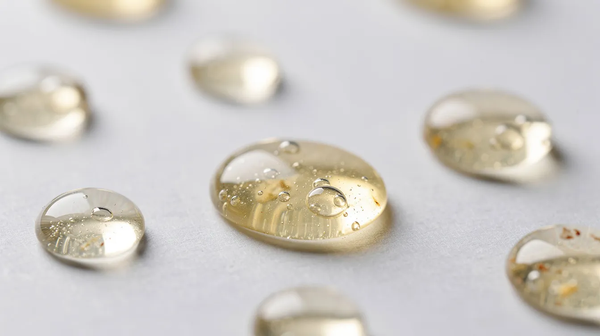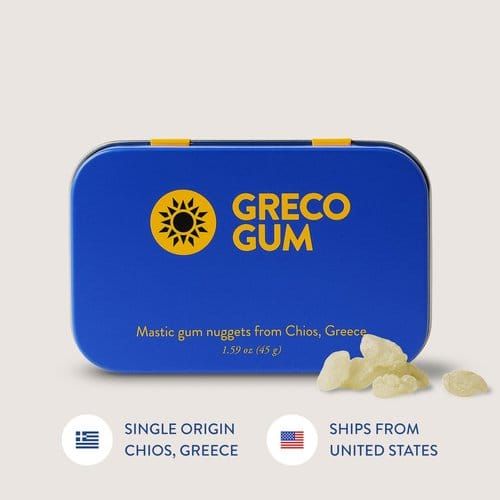

I have been buying and chewing mastic gum for years, and the single biggest frustration is figuring out which sellers are legit and which are selling glorified pine-flavored candy. This guide is everything I wish someone had told me before my first purchase - where to actually buy mastic gum, how to separate authentic Chios resin from cheap knockoffs, and what a fair price looks like in 2024.
Key Takeaways
- You can buy mastic gum online from specialist Greek shops (like Masticlife, Grecogum, Curiospice), major marketplaces (Amazon, Walmart online), local Greek grocery stores, Mediterranean markets, and some pharmacies.
- Authentic Chios mastic is harvested by hand from the mastic tree on the Greek island of Chios and usually carries a PDO (Protected Designation of Origin) seal or "Chios Mastiha" label.
- Mastic gum is available as raw resin, powder, and capsules - expect to pay roughly $10-$18 for a 20-50 g bag of raw mastic tears, and $18-$35 for 40-120 capsule bottles.
- Very cheap "mastic gum" products often contain tiny amounts of real resin mixed into conventional chewing gum, or unverified sap from elsewhere.
- Below, I walk through specific store types, online marketplaces, label checks, and common traps to avoid.
How I Personally Buy Mastic Gum Today (Quick Overview)
I am Kristian, and this is how I currently source my mastic gum. I rotate between three channels depending on what I need and how quickly I need it.
- Official Chios mastiha brand websites - my go-to for raw mastic tears and powder when I want guaranteed authenticity.
- Large online marketplaces (Amazon, Walmart) - useful when I need fast shipping or want to test a new brand without a big commitment.
- Local Greek or Mediterranean food stores - perfect when I want to hold the product, smell it, and check quality before I purchase.
From specialist shops I mostly buy raw tears for chewing and cooking. For travel, I grab capsules. And occasionally I pick up flavored chewing gum products as a convenient option, though these are a separate thing from pure resin. The rest of this article goes step by step through each option and how to avoid counterfeits.
Buying Authentic Chios Mastic Online (Official and Specialist Stores)
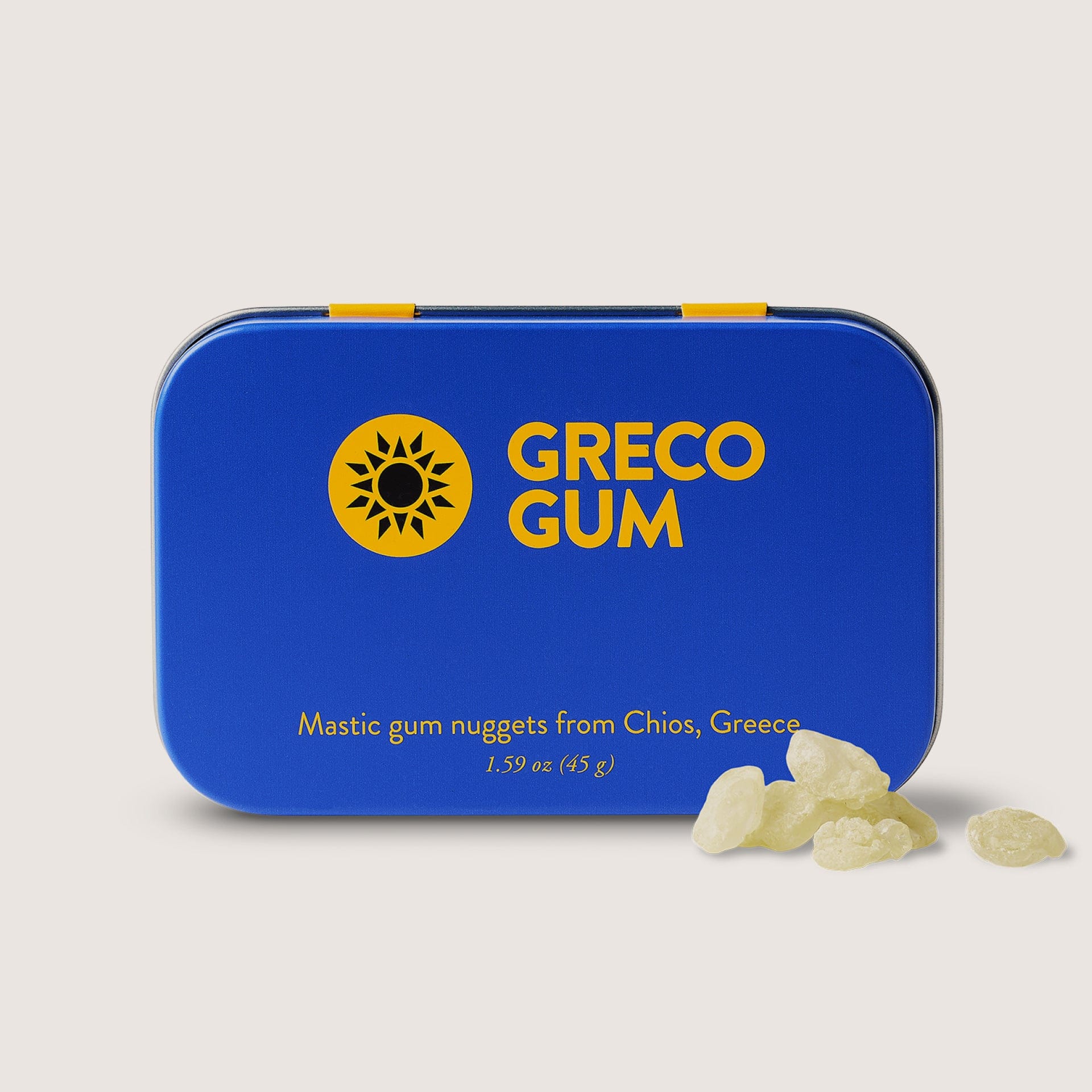
Greco Gum
The brand I actually buy from - 100% pure Chios mastic resin, third-party lab tested. Save 25% on the Starter Pack, or grab 4+ tins for 10% off.
My first choice is always reputable online shops that specialize in Chios mastic or Greek products. Quality control is higher when purchasing mastic gum from these specialized online storefronts because they deal directly with producers on the island.
Specialty Greek importers offer reliable sources for authentic mastic gum. When you visit their product pages, you should see clear photos of the actual tears, weight listed in grams, harvest origin (Chios, Greece), and the PDO logo. These shops often stock a variety of forms - raw tears, powder, capsules, and sometimes mastic oil or flavored gum.
Masticlife provides various mastic gum products on their e-shop, and Grecogum offers mastic gum products online with batch authenticity testing. Shipping to the US from Greece typically takes 7-14 business days and can add $10-$20 depending on order sizes.
Before I add anything to my cart, I look for secure checkout, clear contact details, real product photos (not stock images), and recent reviews mentioning "authentic Chios mastic" or "real mastic tears."
Using Big Marketplaces (Amazon, eBay and Similar)
I do buy mastic gum from Amazon and similar sites, especially when something is out of stock at specialist shops or I need a piece of gum in 48 hours. Mastic gum is also available at Walmart online.
The main risk is that there is a mix of genuine Chios mastic products and vague "mastic gum" chewing gum that barely contains real resin. Filtering is essential.
Here is how I search for best results:
- Use specific terms: "Chios mastic tears," "Chios mastiha PDO," not just "mastic gum."
- Filter by ratings above 4.2 stars with at least a few dozen reviews.
- Check the ingredients list and origin statement - it should say "Product of Greece" or "from Chios."
- Look at close-up images. Pure mastic resin is typically sold as "tears" or nuggets with irregular shapes, not perfect pellets.
- Check the seller name. Avoid anonymous brands with no website.
Ballpark prices I see on marketplaces: 10-20 g of raw Chios mastic runs $9-$16, and 40-100 capsule bottles cost about $18-$35. Ultra-cheap packs under $7 for 20 g are usually not genuine PDO Chios resin.
I always test a small order first. If the flavor, texture, and resinous quality check out, then I scale up. Return policies on marketplaces give you a safe fallback if something is off.
Buying In Person: Greek Grocers, Mediterranean Markets and Pharmacies
If you live in a big city, local shops can be the easiest way to see and smell mastic gum before buying. I have found mastic at Greek specialty grocery stores, broader Mediterranean and Middle Eastern markets, and some pharmacies or health food stores with European imports.
Here is how mastic is usually displayed:
- Small resealable bags of mastic tears near spices (sometimes next to a mortar and pestle or ground cinnamon)
- Boxes of mastic flavored chewing gum near the register
- Blister packs or bottles of capsules in the supplement aisle
In store, I check for Greek text, the words "Chios mastiha" or "mastic from Chios," a PDO mark, a production address in Greece, and an expiration date at least a year out. In some pharmacy-style shops in Greece and Cyprus, Chios mastic capsules and powder are sold behind the counter, so it helps to ask staff directly.
Approximate in-store prices: raw mastic tears 20-25 g for about 8-12 euros in Europe, or roughly $10-$14 in US shops. That is usually similar or slightly cheaper than online once shipping is factored in.
How To Spot Authentic Chios Mastic vs Cheap Knockoffs
Not all "mastic gum" is real Chios mastic, and this is the part of the article I rely on most when I try a new seller. Mastic gum is the resin of Pistacia lentiscus, and the authentic version has been harvested on Chios since ancient times - over 2,500 years.
Visual signs of real mastic tears:
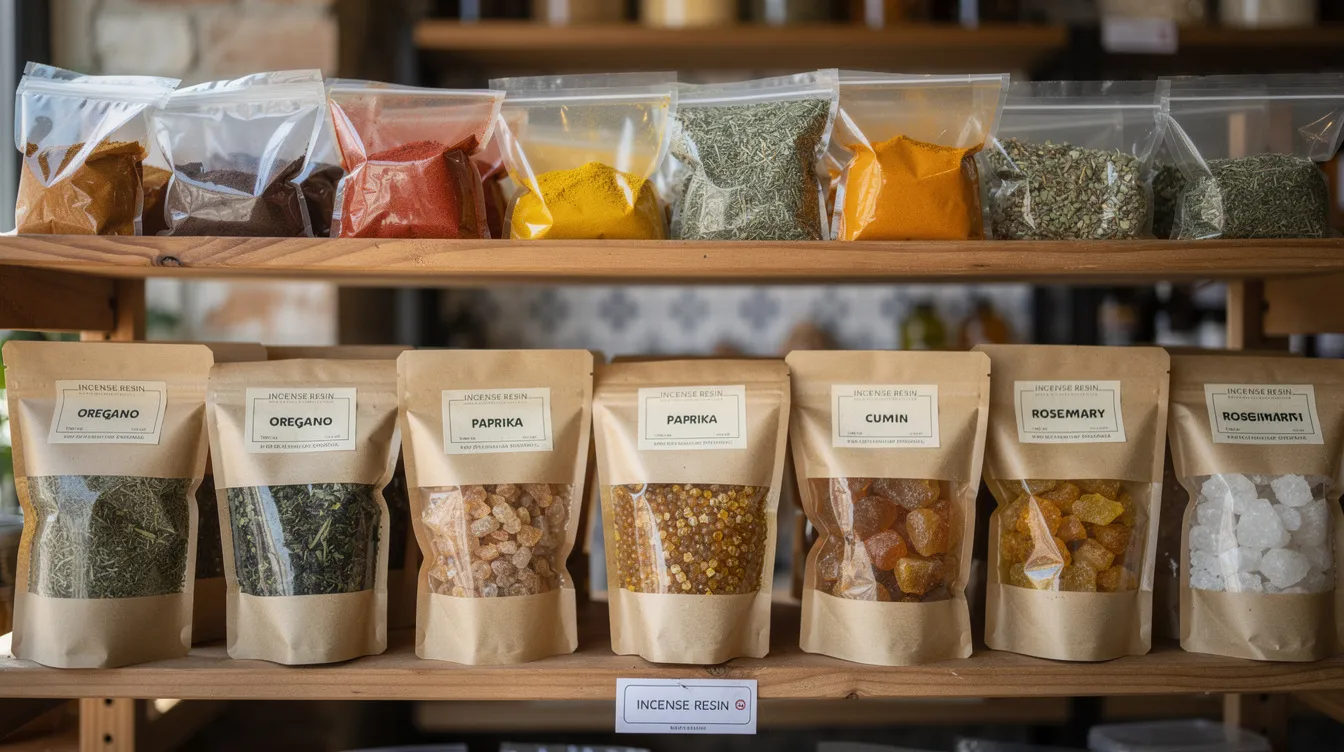
- Irregular teardrop or lentil-shaped pieces, not uniform pellets
- Translucent to opaque, off-white to pale yellow color
- Tiny surface cracks or a frosted look from natural powder
- Droplets of mastic resin are smaller and drier than nuggets
Smell and flavor: Mastic gum has a cooling, woody, and sweet flavor profile with a piney, resinous note that mellows as you chew. It is nothing like mint or sugar-heavy conventional chewing gum. Expect a pinch of bitterness at first that gives way to something sweet and aromatic.
Suspicious products look like this:
- Perfectly shaped pellets resembling a standard chewing gum stick
- Very bright colors or strong artificial mint flavor that overpowers any resin aroma
- Product that never develops any hardness when cold
Certification clues:
- PDO seal for "Chios Mastiha"
- The Chios Mastiha Growers Association mark of authenticity
- A clear statement that the resin is from the Greek island of Chios, not just "Mediterranean region"
If a seller claims you get 100 g of pure Chios mastic for $10, it is almost certainly not genuine given the labor-intensive, hand-harvested supply.
Reading Labels: What I Always Check Before I Buy
Labels are my first line of defense before I ever taste or smell the product. Here is what I look for:
For raw resin: The label should show "Chios mastic," "Chios mastiha," or "mastic gum (Pistacia lentiscus var. Chia)," plus an origin line stating "Product of Greece" or "Harvested on the island of Chios." Products should indicate "Chios mastiha" or connection to the Chios Mastiha Growers Association for authenticity.
For capsules and powder: I check the supplement facts for the exact weight of mastic per capsule, whether it is pure mastic or mixed with additional ingredients and fillers, and whether the label says "Chios mastic" rather than generic "mastic extract."
For chewing gum products: I read the full ingredient list to see whether mastic is a minor flavoring or a main component. Brands that list "mastic flavor" without any real resin content in milligrams are not worth the price.
General red flags: Sloppy English with no company address or website. Real exports from Greece typically feature multiple European languages on the packaging. I also save product photos or screenshots of labels from online orders so I can compare future purchases and spot any quiet formula changes.
Price Expectations in 2024: What Is Reasonable To Pay
Mastic gum is not cheap. The harvest happens by hand during summer on a single island, supply is limited, and demand keeps growing. Here is what a fair price looks like so you can avoid both rip-offs and suspiciously cheap offers.
| Form | Typical Price Range | Notes |
|---|---|---|
| Raw mastic tears (20-50 g) | $0.30-$0.60 per gram | Bigger bags slightly cheaper per gram |
| Chios mastic capsules (40-120 ct) | $18-$35 per bottle | Higher price usually means more mastic per capsule |
| Flavored mastic chewing gum | $2-$6 per pack | Lower resin content, more like regular gum |
| Chios Mastiha mastic gum (entry level) | ~$12.50 | Easy starting point |
Curiospice sells mastic gum for $12 with free shipping over $65, which can pair well with a larger order. Shipping from Greece to the US might add $10-$20, but it is often worth it for larger orders where the per-gram cost drops.
If a product is priced far below these ranges while claiming to be pure Chios mastic, I treat it as a red flag and check reviews and certifications carefully before I hit purchase.
Choosing Between Forms: Tears, Powder, Capsules and Chewing Gum
I am not going to repeat health benefit content here - just practical buying notes on each form.
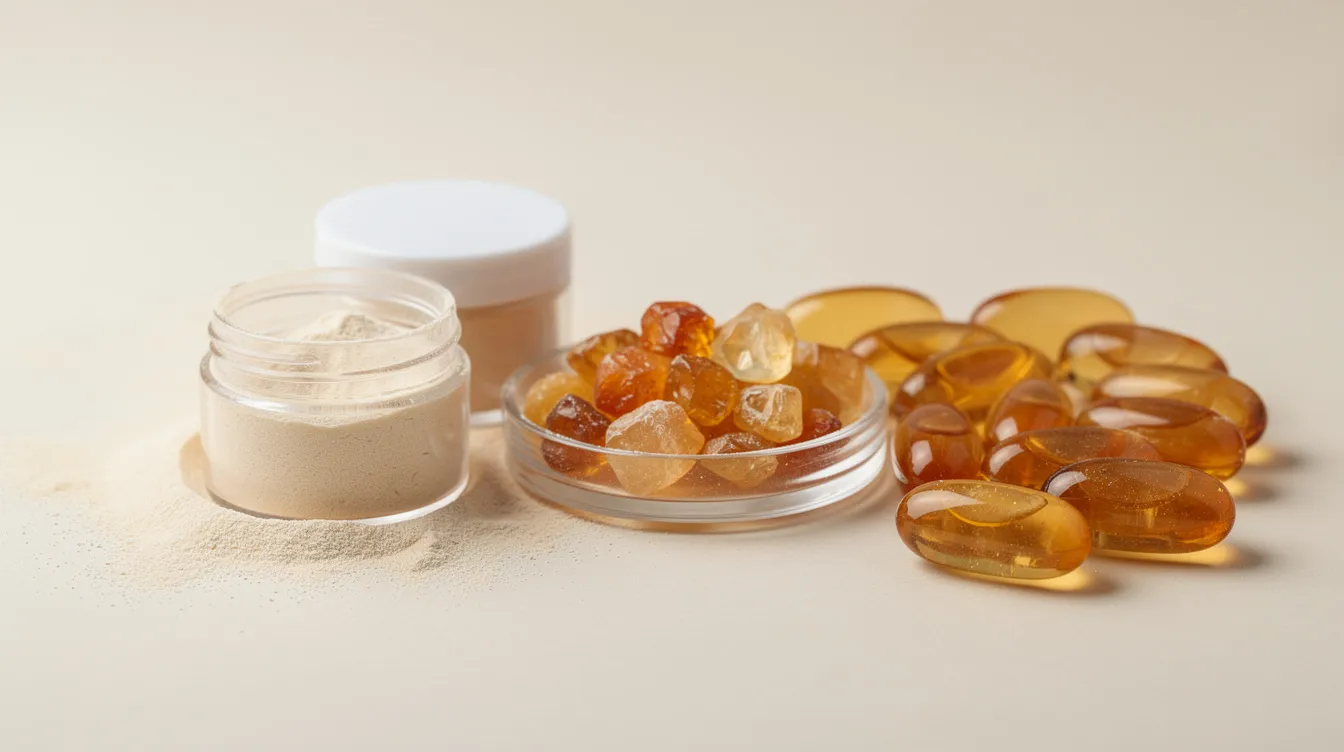
Raw mastic tears suit people who want the full chewing experience, direct contact with teeth and gums, and the naturally resinous texture. Raw mastic resin is used for chewing and flavoring foods. The initial hardness softens within minutes in your mouth, and the flavor break is worth the patience.
Powder is often bought by people who cook or bake with mastic - you can grind tears yourself with a mortar and a pinch of salt to prevent clumping, or buy pre-ground. Some add it to beverages, yogurt, or recipes that call for cinnamon and mastic together. Mastic powder can be used in both mouth and digestive applications. Expect to pay more per gram because of the extra processing.
Capsules suit travelers and anyone who does not like chewing resin. Mastic capsules deliver resin directly to the gut without chewing, which matters for digestion-focused use. I look for clear dosage per capsule, minimal fillers, confirmed Chios origin, and a trustworthy brand.
Flavored mastic chewing gum is a hybrid product with added sweeteners, sugar, and flavors. It is traditionally chewed for breath freshening but usually has lower mastic content. I buy it as a convenient option, not my main source of resin. To freeze or refrigerate these products can help them hold their texture if you live somewhere with more moisture or heat.
Choose based on how you realistically plan to use mastic daily, not marketing claims.
Common Buying Mistakes I See (And How To Avoid Them)
Early on, I made a couple of errors that cost me money. I once ordered a large bag from an untested marketplace seller and ended up with soft, clumped resin that smelled like synthetic pine. Another time I assumed a "mastic gum" product in a local store was pure resin when it was actually a stick of flavored gum with almost no real mastic.
Common mistakes I see happen to others:
- Assuming any "mastic gum" chewing product is pure resin
- Ignoring origin info on labels
- Chasing the cheapest offers without checking authenticity
- Buying bulk from a new seller without testing a small order first
- Not considering that heat or moisture during shipping (especially in summer) can permanently damage mastic tears - the resin softens and clumps
My advice: always start with a small order from a new brand or shop. Chew a piece, check the flavor and texture over a few hours, and scale up only if you are happy. Store your stock in a cool, dry place away from direct sun. It is easy to keep mastic in good shape with proper packaging and storage.
Once you have found one or two reliable sources, buying mastic gum becomes simple and routine.
FAQ
Can I buy real Chios mastic directly from the Greek island?
Most of us outside Greece buy through exporters and official brand websites, but many of those companies are based on Chios or source directly from the island cooperatives. Some brands ship worldwide from Greece with tracked post, and larger orders make the shipping cost per gram more reasonable. If you are traveling to Greece - especially Athens or Thessaloniki - you will often find dedicated mastiha shops carrying a full variety of Chios mastiha products.
Is it safe to buy mastic gum from small sellers on social media?
I advise caution. Social media sellers rarely provide full labeling, origin proof, or reliable return policies. If a seller cannot show close-up photos of the package, labels, and origin details, I personally skip them. Stick to established online stores and marketplaces where there is at least some buyer protection and public review history.
How long does raw mastic gum last after I buy it?
Properly stored raw mastic tears can hold their quality for 2-3 years or more, as long as they are in an airtight container away from heat and direct light. Over time they may become a bit harder but are still usable. If they smell strongly of plastic or have visible mold, discard them. Check the best-before date on the package and aim for at least 12-18 months of remaining shelf life at the time of purchase.
Does insurance or health coverage ever pay for Chios mastic capsules?
In most countries, Chios mastic is treated as a dietary supplement or traditional food ingredient, not a prescription drug, so it is usually not reimbursed by insurance. Some health savings or flexible spending accounts might allow supplement purchases, but you need to confirm with your specific plan. Keep receipts if you plan to claim the cost through any health-related account.
Is there any real difference between brands that all claim to use Chios mastic?
While the root resin all comes from the same island, brands differ in how they sort, store, grind, and package mastic. This can affect flavor, freshness, and consistency. Capsule brands also differ in how much pure mastic they include per capsule and what additional ingredients they use. I encourage you to compare labels, read independent reviews, and test small amounts from two or three brands to find what works for your needs and budget.